


What's Happening?
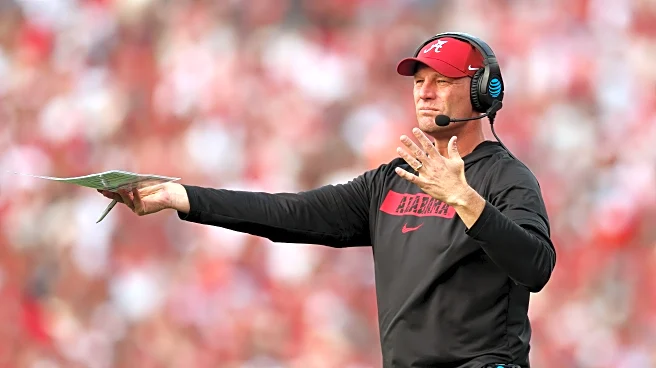
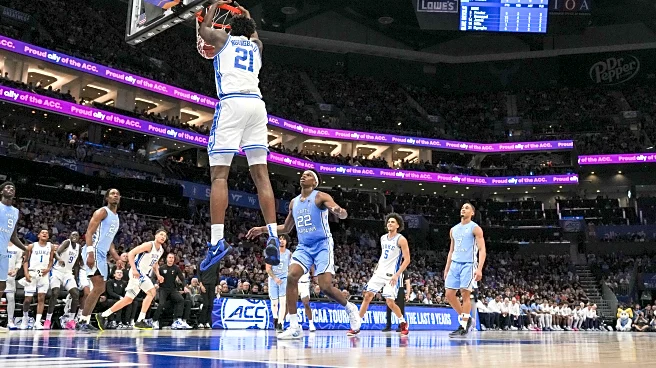
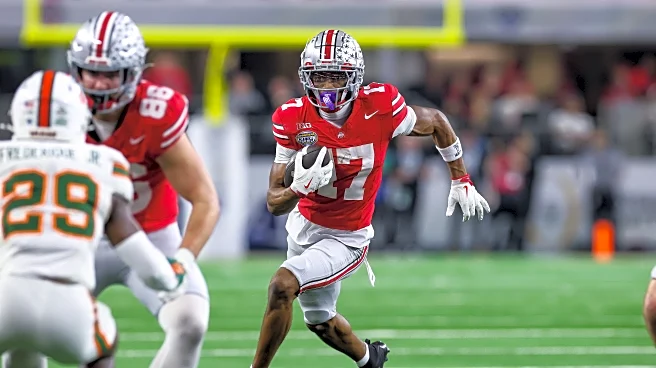
The NCAA transfer portal is poised to open on January 2, 2026, allowing college football players to officially enter and seek new opportunities. This year, the focus is on quarterbacks, with several notable players expected to make moves. Among them is Arizona State's Sam Leavitt, who led his team to a Big 12 championship in 2024 but faced a season-ending surgery in 2025. Notre Dame's Kenny Minchey, Texas's Trey Owens, and Utah's Isaac Wilson are also planning to enter the portal. Max Johnson from North Carolina, who has battled injuries throughout his career, is seeking a seventh year of eligibility. The transfer portal has become a critical component of college football, allowing players to find new teams where they can compete for starting
positions.
Why It's Important?
The opening of the transfer portal is significant for college football as it reshapes team rosters and impacts the competitive landscape. For players, it offers a chance to find better opportunities, especially for those who have been backups or faced injuries. For teams, it provides a way to fill gaps and strengthen their lineups. The movement of quarterbacks, in particular, can dramatically alter a team's prospects for the upcoming season. This year's portal activity is expected to be intense, with several high-profile quarterbacks potentially changing schools, which could influence team dynamics and conference standings.
What's Next?
As the transfer portal opens, schools will begin recruiting players to fill their needs, and players will evaluate their options to find the best fit. The decisions made in the coming weeks will set the stage for the 2026 college football season. Teams will need to quickly adapt to new players and integrate them into their systems. The NCAA's rules on transfer eligibility and the potential for players to gain additional years of eligibility will also play a role in how these moves unfold.