


What's Happening?
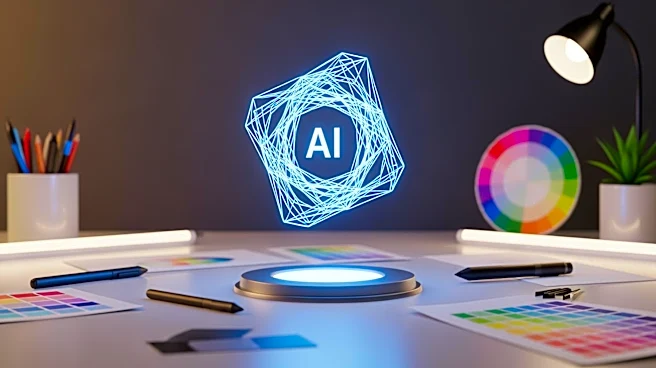
Canva has launched AI 2.0, introducing 'Conversational Design' to enhance creative workflows. This new feature allows users to engage in a back-and-forth chat with the platform, maintaining context as ideas evolve. The AI platform, used over 27 billion
times since its establishment in 2022, now includes autopilot scheduling and 'living memory,' which learns from user work and adapts to team preferences. Canva's founders, Melanie Perkins, Cliff Obrecht, and Cameron Adams, emphasize the shift towards agentic workflows, where AI takes actions on behalf of creators, reducing operational drag and allowing focus on storytelling. This development marks a significant shift in creative work, transforming it from a high-overhead approach to an on-demand service.
Why It's Important?
The introduction of Canva AI 2.0 represents a fundamental change in how creative work is conducted, offering a more efficient and streamlined process. By automating tasks and maintaining context throughout the creative process, Canva's AI reduces the need for extensive manual input, freeing up time for creators to focus on content and editorial integrity. This shift could lead to cost savings for enterprises, as it reduces the need for hiring crews and purchasing equipment. Additionally, the ability to engage in conversational design enhances collaboration and innovation, potentially leading to more dynamic and impactful creative outputs.
What's Next?
Canva's AI 2.0 is expected to continue evolving, with potential expansions in functionality and user base. As the platform integrates more advanced AI features, it may attract a broader range of users, from individual creators to large enterprises. The company may also explore partnerships and collaborations to further enhance its offerings. As AI technology becomes more prevalent in creative industries, Canva's approach could set a precedent for other companies, driving innovation and competition in the market.