




What's Happening?
QNX, a division of BlackBerry Ltd., is set to have a significant presence at the upcoming Robotics Summit & Expo in Boston on May 27 and 28. The company plans to deliver hands-on demonstrations and present new research that highlights how its software
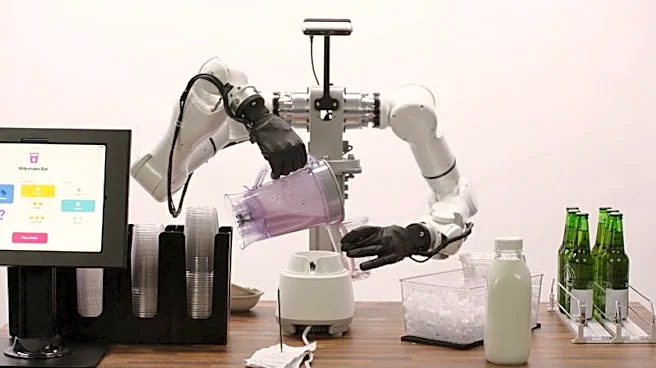
can provide a safe, secure, and deterministic foundation for next-generation robotic systems, particularly those enabled by artificial intelligence (AI). QNX will showcase interactive demonstrations that illustrate how its real-time operating system (RTOS) translates AI-driven decisions into precise and reliable physical actions. These demonstrations will include accessible robotics prototyping, digital factory automation, and high-performance motion replication using Intel and NVIDIA hardware. Additionally, QNX President John Wall will participate in a keynote panel discussing the future of robot autonomy alongside executives from Amazon Robotics, Locus Robotics, and Universal Robots.
Why It's Important?
The advancements showcased by QNX at the Robotics Summit are crucial as they represent a shift in robotics from enclosed industrial settings to shared human environments. This transition necessitates the integration of safety, security, and real-time performance into robotic systems from the outset. The ability of QNX's software to scale from low-cost prototypes to production-grade commercial robots is significant for developers aiming to create systems that can safely and predictably operate alongside humans. The event also highlights the growing importance of AI in robotics, as it moves from theoretical applications to real-world implementations where safety stakes are high. This development could have wide-ranging implications for industries such as manufacturing, logistics, and healthcare, where robotics are increasingly being deployed.
What's Next?
During the event, QNX will debut its 'Inside the Robot: Architecture Benchmark Report,' a global research study examining the evolution of robotics development. This report, based on a survey of 1,000 robotics developers worldwide, will identify significant inhibitors to progress and gaps between system ambitions and current capabilities. The findings could influence future developments in the robotics industry by highlighting areas that require further innovation and investment. As robotics systems become more software-defined and AI-enabled, the insights from this report could guide developers and companies in creating more advanced and reliable robotic solutions.