



What's Happening?
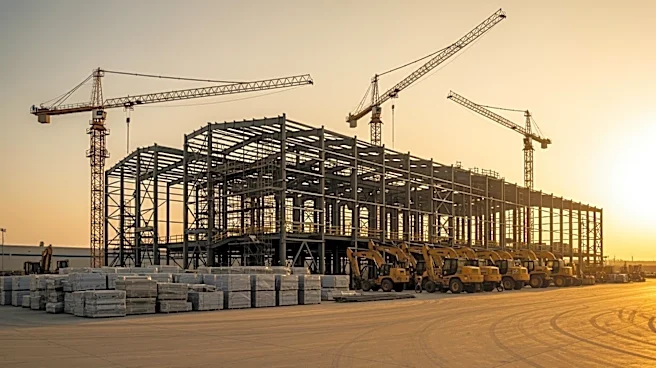
Agratas, the global battery business of the Tata Group, has reached a significant construction milestone at its Sanand battery manufacturing facility in Gujarat. The completion of the main steel structure keeps the project on track for production by 2027.
The facility's steel frame spans 700 meters in length, 150 meters in width, and rises to 34 meters at its highest point, covering a built-up area of 105,000 square meters. Over 24,000 tonnes of steel have been used, with work on associated buildings progressing in parallel. The project is executed by Tata Projects, in collaboration with Tata Consulting Engineers and multiple steel contractors, with materials sourced domestically to support local supply chains. The facility aims to produce advanced battery cells for electric vehicles and energy storage applications, contributing to India's goal of achieving net zero emissions by 2070.
Why It's Important?
The Sanand facility is crucial for India's transition to electric mobility and grid-scale energy storage, supporting the country's ambitious target of 500 GW of non-fossil fuel energy capacity by 2030. The plant's annual capacity of 20 GWh in its first phase will help meet the growing demand for advanced battery cells, positioning India as a key player in the global battery value chain. The project is expected to generate significant employment opportunities across various functions, contributing to workforce development and economic growth in the region. By reducing dependence on imports and supporting domestic supply chains, the facility also strengthens India's industrial capabilities.
What's Next?
As the project progresses, Agratas will focus on building the systems, processes, and capabilities required for reliable, world-class battery production. The company is investing in workforce development to create a skilled talent pool to support safe and high-quality manufacturing. The facility's completion will enable India to accelerate its transition away from fossil fuels, contributing to global efforts to combat climate change. The successful execution of this project could serve as a model for future industrial developments in the country.