
What's Happening?
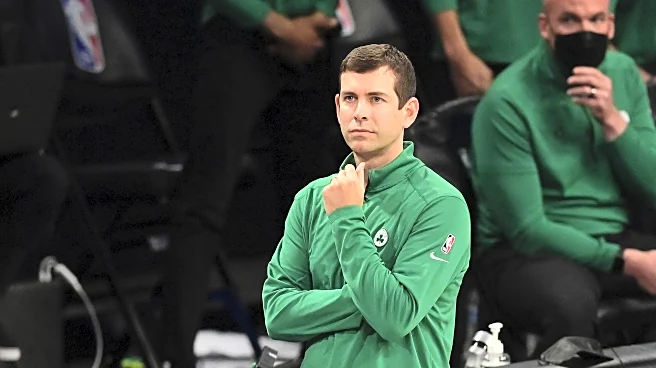
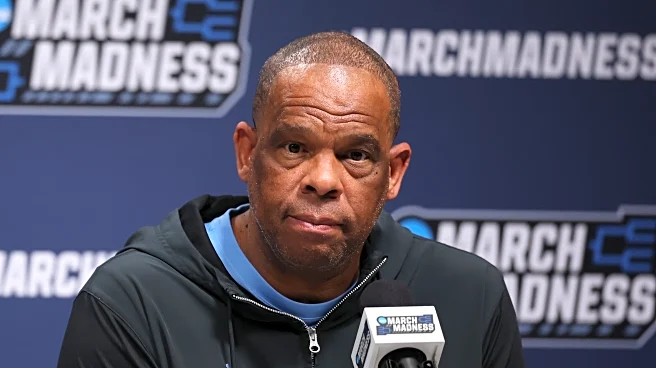
Brad Stevens, currently the President of Basketball Operations for the Boston Celtics, has reportedly removed himself from consideration for the head coaching position at the University of North Carolina (UNC). This development follows the recent firing
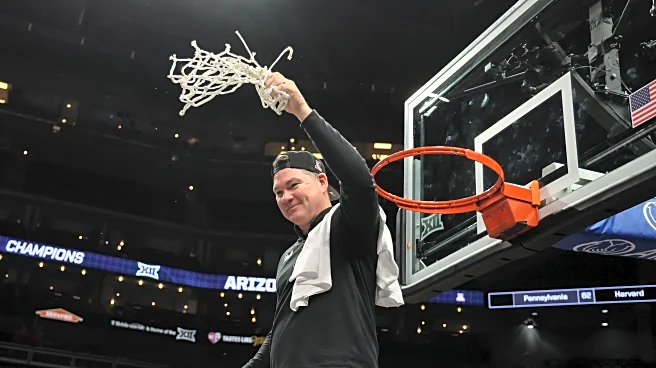
of UNC's head coach, Hubert Davis. According to CBS Sports' Matt Norlander, Stevens was a top candidate on UNC's list, which also includes other notable names such as Arizona's Tommy Lloyd and Michigan's Dusty May. Stevens, who has a successful history as a coach, particularly during his tenure at Butler University, has been considered a highly desirable candidate in college basketball circles. Despite his success, Stevens has chosen to remain in his executive role with the Celtics, a position he transitioned to after a successful coaching career that included leading the Celtics to multiple playoff appearances.
Why It's Important?
The decision by Brad Stevens to decline the UNC coaching position is significant for several reasons. Firstly, it underscores the challenges faced by UNC in finding a suitable replacement for Hubert Davis, who had a mixed record during his tenure. Stevens' decision also highlights the allure and stability of executive roles in professional sports, as opposed to the often volatile nature of coaching positions. For UNC, this means continuing their search for a coach who can restore the program to its former glory, especially after missing the NCAA Tournament in 2023. The outcome of this search will have implications for the university's basketball program, its recruitment capabilities, and its standing in collegiate sports.
What's Next?
With Brad Stevens out of the running, UNC will need to focus on other candidates to fill the head coaching vacancy. The list includes experienced coaches like Tommy Lloyd and Dusty May, who may bring different strengths to the program. The decision will likely involve considerations of each candidate's ability to recruit top talent, manage the pressures of a high-profile program, and navigate the competitive landscape of college basketball. The university's choice will be closely watched by fans and analysts, as it will set the direction for the team's future performance and reputation.