






What's Happening?
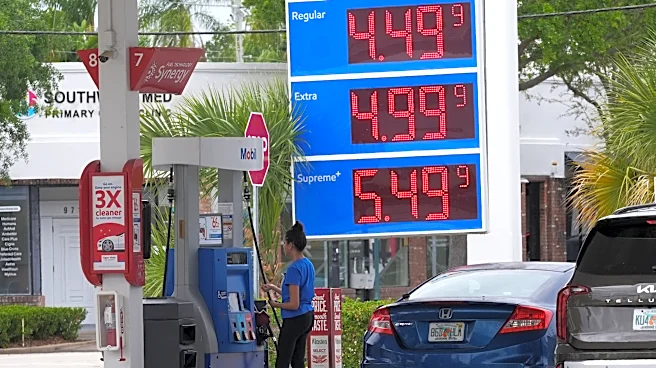
Consumer sentiment in the U.S. has plummeted to a record low in April, driven by rising energy prices and the ongoing conflict in Iran. According to a University of Michigan survey, the consumer sentiment index fell to 47.6, marking a 10.7% decline from
March. This drop coincides with a sharp increase in inflation expectations, with respondents anticipating a 4.8% rise in prices over the next year. The survey director, Joanne Hsu, noted that many consumers attribute unfavorable economic changes to the Iran conflict. Despite a ceasefire announced on April 7, the survey primarily reflects conditions from March, suggesting that economic expectations may improve once consumers gain confidence in the resolution of supply disruptions and moderation of gas prices.
Why It's Important?
The decline in consumer sentiment and rising inflation expectations have significant implications for the U.S. economy. High energy prices, exacerbated by the Iran conflict, are contributing to inflationary pressures, which can impact consumer spending and economic growth. The record low sentiment indicates widespread concern among consumers about the economic outlook, potentially leading to reduced consumer spending and slower economic recovery. The situation underscores the importance of resolving geopolitical tensions and stabilizing energy markets to restore consumer confidence and support economic stability.
What's Next?
As the situation in Iran evolves, consumer sentiment and inflation expectations may shift. The resolution of supply disruptions and stabilization of energy prices could lead to improved economic expectations. Policymakers and economic stakeholders will need to monitor these developments closely to address inflationary pressures and support consumer confidence. The Bureau of Labor Statistics' upcoming reports on inflation and economic indicators will provide further insights into the trajectory of the U.S. economy.