


What's Happening?
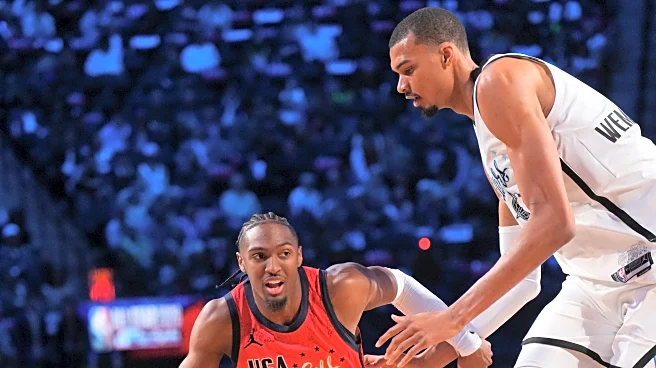
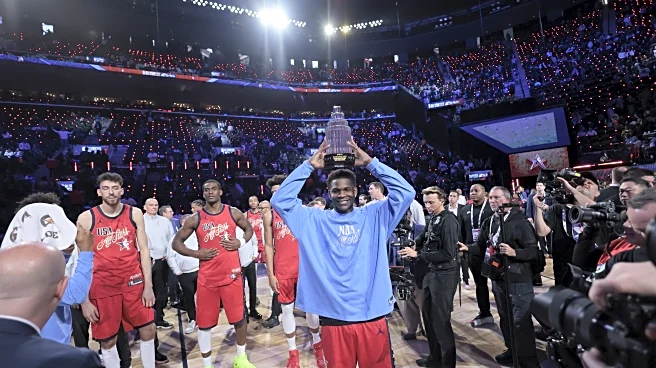
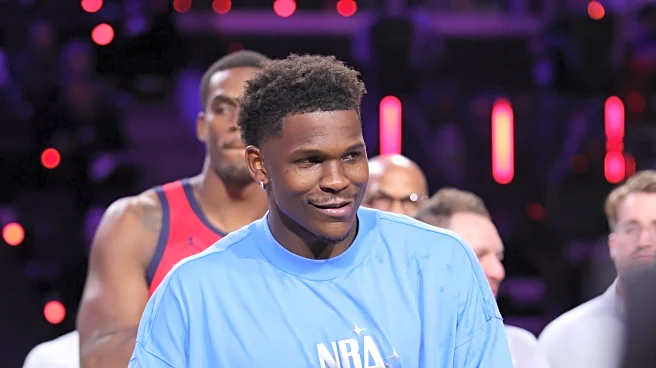
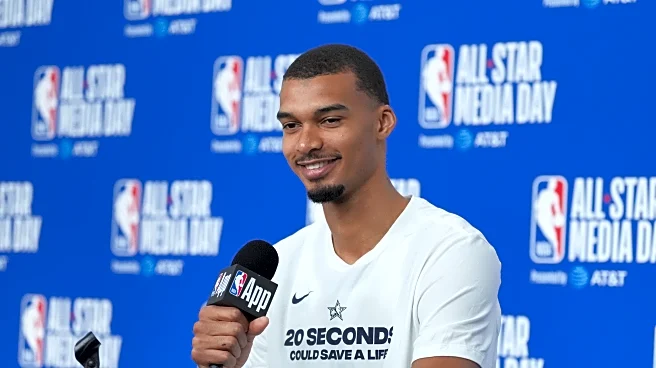
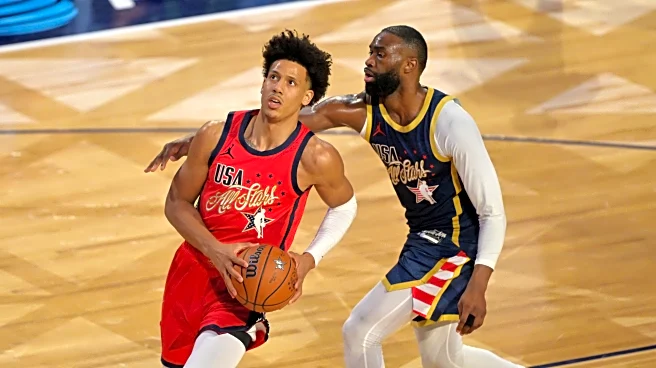
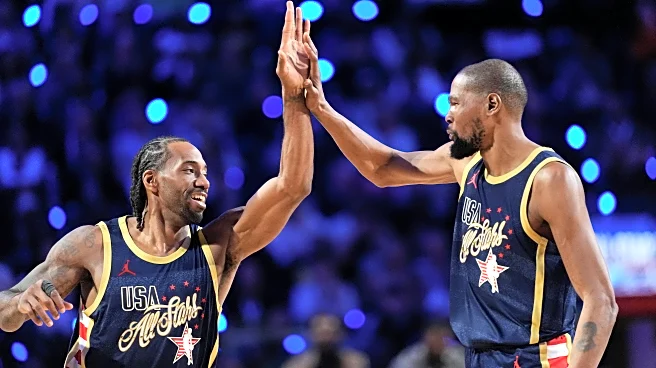
The NBA All-Star Game introduced a new format this year, featuring a round-robin tournament with three teams: Team Stars, Team Stripes, and Team World. The event, held in Inglewood, California, saw Minnesota Timberwolves guard Anthony Edwards deliver an MVP performance with 32 points, leading Team Stars to victory. The format change, which split players into young American standouts, veteran American talent, and international players, aimed to increase competitiveness. The games were played in four 12-minute segments, with Team Stars ultimately defeating Team Stripes 47-21 in the final. Notable performances included Kawhi Leonard's 31 points for Team Stripes and Victor Wembanyama's leadership for Team World.
Why It's Important?
The revamped All-Star Game format
reflects the NBA's ongoing efforts to enhance the competitiveness and entertainment value of its midseason showcase. By introducing a round-robin tournament and diversifying team compositions, the league aims to engage fans and players more deeply. This change could set a precedent for future All-Star Games, potentially influencing how other sports leagues approach their own exhibition events. The success of this format may also impact player participation and fan interest, crucial for maintaining the NBA's global appeal and commercial success.
What's Next?
Following the positive reception of the new format, the NBA may consider retaining or further refining this structure for future All-Star Games. The league will likely evaluate player feedback and fan engagement metrics to determine the format's effectiveness. Additionally, the performance of young stars like Anthony Edwards could influence team strategies and player marketability moving forward. The NBA will continue to explore innovative ways to keep its All-Star Game relevant and exciting, balancing tradition with modern entertainment demands.