
What's Happening?
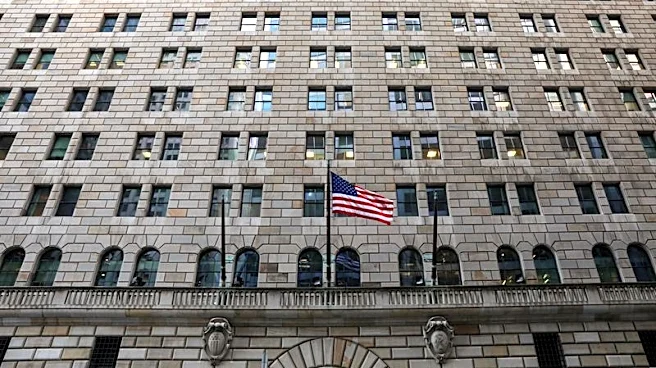
Federal Reserve Bank of New York President John Williams has stated that the leadership of the Federal Open Market Committee (FOMC) remains stable despite the delayed confirmation of Kevin Warsh as the new
Federal Reserve Chair. President Trump nominated Warsh to succeed Jerome Powell, whose term ends in May. However, Warsh's confirmation has been stalled due to a Department of Justice investigation into cost overruns at the Fed's headquarters. This delay has led to concerns about a seamless transition in leadership. Williams emphasized that Powell would continue to lead the FOMC until a new chair is confirmed, ensuring continuity in the central bank's monetary policy operations.
Why It's Important?
The delay in confirming a new Federal Reserve Chair could have significant implications for U.S. monetary policy and economic stability. The Federal Reserve plays a crucial role in setting interest rates and guiding economic policy, and any uncertainty in its leadership could affect financial markets and economic confidence. The ongoing investigation and the potential for a prolonged leadership transition may impact the Fed's ability to respond to economic challenges effectively. Stakeholders, including investors and policymakers, are closely monitoring the situation, as the Fed's decisions influence inflation, employment, and overall economic growth.
What's Next?
If Warsh is not confirmed by the end of Powell's term, Powell has indicated he will serve as chair pro tem, maintaining leadership continuity. The Senate's decision on Warsh's confirmation will be pivotal, and the outcome of the Department of Justice investigation could further influence the timeline. The central bank's focus remains on executing its monetary policy duties, but the leadership uncertainty may prompt discussions on the Fed's governance and the impact of political influences on its operations.