





What's Happening?
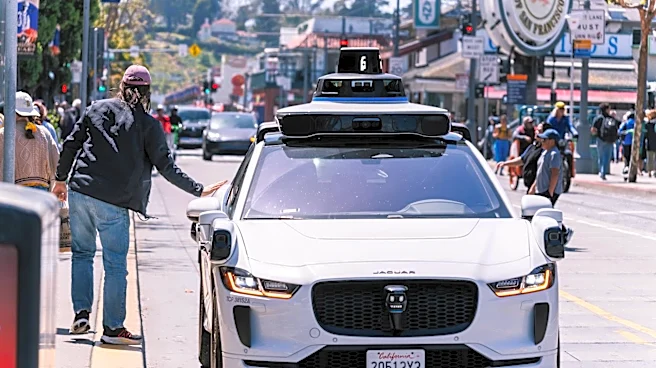
Uber has publicly criticized its autonomous vehicle (AV) partner, Waymo, for its deployment strategy and technology, suggesting that a hybrid approach combining human and automated drivers is more scalable and equitable. Uber's public policy head for California,
Danielle Lam, questioned Waymo's choice of deployment locations, highlighting the absence of AV operations in cities like Oakland, which have demographics similar to San Francisco. Uber's stance reflects its role as a mediator between cities and labor groups skeptical of driverless fleets and AV companies aiming to lead in autonomous vehicle technology. Despite their partnership, Uber has expressed concerns about the reliability and scalability of AV-only operations, advocating for a hybrid network that includes human drivers.
Why It's Important?
The tension between Uber and Waymo underscores the challenges in the autonomous vehicle industry, particularly regarding deployment strategies and market scalability. Uber's criticism highlights the potential for a 'two-tier transportation system' where AV operations are concentrated in wealthier areas, leaving other regions underserved. This situation raises questions about equity and access in the rollout of autonomous technologies. The debate also reflects broader industry concerns about the readiness of AV technology to meet public expectations for reliability and safety. Uber's advocacy for a hybrid model suggests a strategic positioning to balance technological advancement with existing labor markets, potentially influencing regulatory approaches and public acceptance of AVs.
What's Next?
Uber's continued advocacy for a hybrid AV model may influence regulatory discussions and public policy decisions regarding the deployment of autonomous vehicles. As cities and states consider the integration of AVs into their transportation systems, Uber's position could shape the development of regulations that balance innovation with public safety and labor concerns. The ongoing partnership with Waymo may also evolve as both companies navigate these challenges, potentially leading to adjustments in their collaborative strategies. Stakeholders, including city governments and labor groups, will likely continue to engage in discussions about the equitable distribution of AV services and the implications for urban mobility.