







What's Happening?
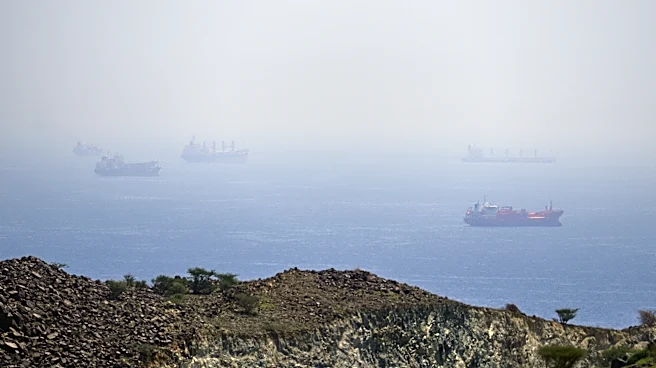
Goldman Sachs has issued a warning regarding the potential economic impact if the Strait of Hormuz remains closed. According to Daan Struyven of Goldman Sachs, the base case scenario is for oil flows through the Strait to normalize by mid-May, which would
keep crude prices near current futures pricing. However, if the waterway remains shut, there is a significant risk of increased prices and a sharp decline in global demand. The Strait of Hormuz is a critical chokepoint for global oil transportation, and its closure could have severe implications for the global oil market.
Why It's Important?
The Strait of Hormuz is one of the world's most important oil transit chokepoints, with a significant portion of the world's oil supply passing through it. A prolonged closure could lead to a substantial increase in oil prices, affecting global markets and potentially leading to economic instability. This situation could have far-reaching consequences for industries reliant on oil, as well as for countries dependent on oil imports. The potential for demand destruction could also impact economic growth and lead to increased inflationary pressures.
What's Next?
If the closure persists, stakeholders, including governments and oil companies, may need to explore alternative routes or increase production elsewhere to mitigate the impact. Additionally, diplomatic efforts may intensify to resolve the situation and ensure the resumption of oil flows. The international community will likely monitor the situation closely, as prolonged disruptions could lead to broader economic and geopolitical consequences.