
What's Happening?
In 2025, interior designers across the United States have been blending historical elements with modern conveniences in home renovations. This trend is evident in various projects, such as a 19th-century
Washington, D.C. kitchen that was transformed by architect Nicholas Potts. Potts replaced the 'Agreeable Gray' color palette with a more traditional look using Tailor Tack by Farrow & Ball, while also adding modern features like a powder room. Similarly, a mid-century modern home in Laurel Canyon, Los Angeles, was updated by designers Lauren Caris Cohan and Matt Jacoby, who incorporated rich wood paneling and monochromatic tiles to balance past and present aesthetics. In Bellport, Long Island, a kitchen renovation led by Laura Bindloss and her husband Simon featured a moody blue palette and modern appliances, while maintaining a traditional feel with red-veined marble and fiery orange cabinet interiors.
Why It's Important?
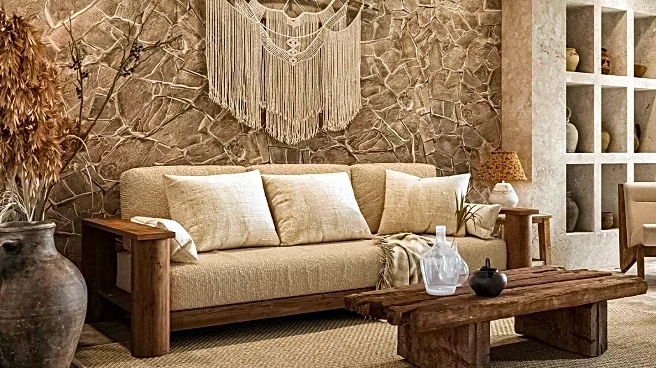
These renovations reflect a growing trend in the U.S. housing market where homeowners and designers are increasingly valuing the integration of historical charm with modern functionality. This approach not only preserves the architectural integrity of older homes but also enhances their livability with contemporary amenities. The trend is significant as it caters to a demographic that appreciates both nostalgia and modernity, potentially increasing property values and market appeal. Additionally, the use of AI-driven custom cabinetry and other technological advancements in these projects highlights the role of technology in modern design, offering more personalized and efficient renovation solutions.
What's Next?
As this trend continues, it is likely that more homeowners will seek to renovate their properties in a way that honors historical elements while incorporating modern conveniences. This could lead to increased demand for designers who specialize in such hybrid restorations. Additionally, the use of AI and other technologies in design and renovation is expected to grow, providing more innovative solutions and potentially reducing costs. The market may also see a rise in the popularity of sustainable materials and practices as part of these renovations, aligning with broader environmental concerns.
Beyond the Headlines
The blending of historical and modern elements in home renovations also raises questions about the preservation of cultural heritage. As more homes undergo such transformations, there is a need to balance modernization with the conservation of historical features that contribute to a community's identity. This trend could influence local zoning laws and preservation guidelines, prompting discussions about how best to maintain the character of historic neighborhoods while accommodating modern living standards.