


What's Happening?
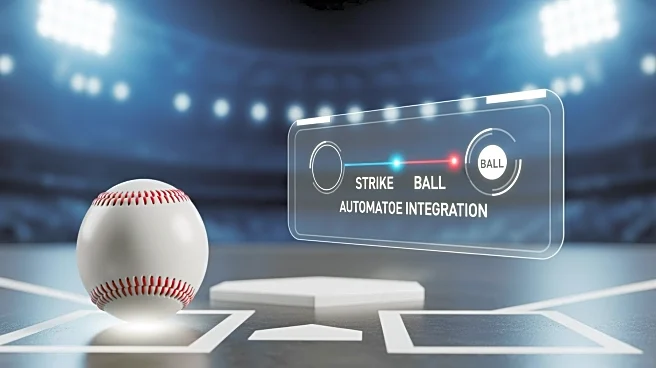
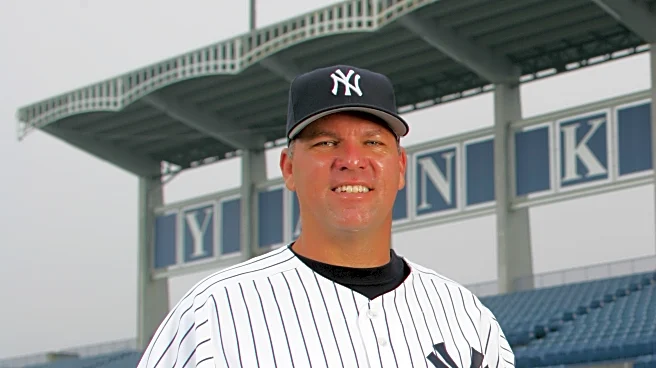
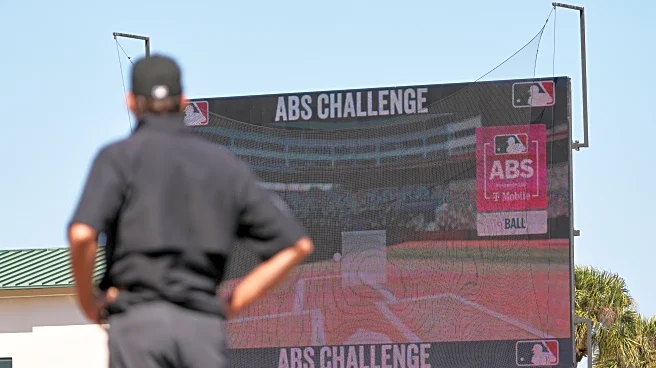
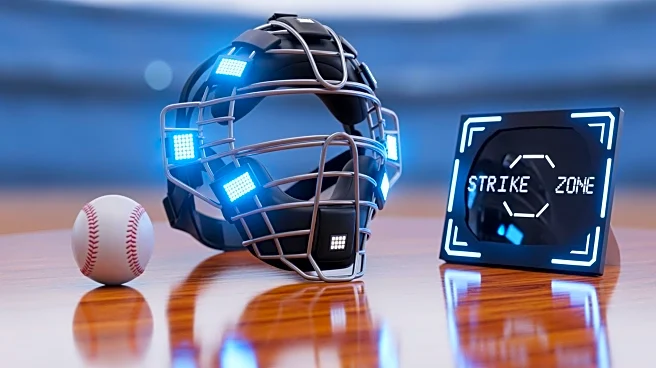
The Automated Ball-Strike System (ABS) is set to make its regular-season debut in Major League Baseball, starting with a game between the New York Yankees and the San Francisco Giants. This system uses Hawk-Eye technology with 12 cameras to measure whether
a pitch crosses the strike zone with high accuracy. The introduction of ABS is expected to create winners and losers among pitchers and batters who previously benefited from human judgment calls. Notably, pitchers like Kevin Gausman and Kyle Hendricks, who have historically received favorable calls on pitches outside the strike zone, may need to adjust their strategies. Conversely, batters like Mookie Betts, who often face unfavorable calls, might benefit from the system's precision.
Why It's Important?
The implementation of ABS represents a significant shift in how baseball games are officiated, potentially altering the dynamics of the sport. For pitchers who have relied on getting calls just beyond the strike zone, this change could mean losing a competitive edge. On the other hand, batters who have been disadvantaged by incorrect calls may find the system beneficial. The accuracy of ABS could lead to fairer outcomes in games, reducing the impact of human error. This change could also influence team strategies and player performance, as both pitchers and batters adapt to the new system.
What's Next?
As ABS is integrated into regular-season games, teams and players will need to adjust their approaches. Pitchers may need to refine their techniques to align with the precise strike zone defined by ABS, while batters might become more confident in challenging calls. The system's impact will be closely monitored by teams, players, and fans, potentially leading to further discussions about its effectiveness and fairness. The success of ABS could pave the way for its broader adoption in other leagues and levels of play.