



What's Happening?
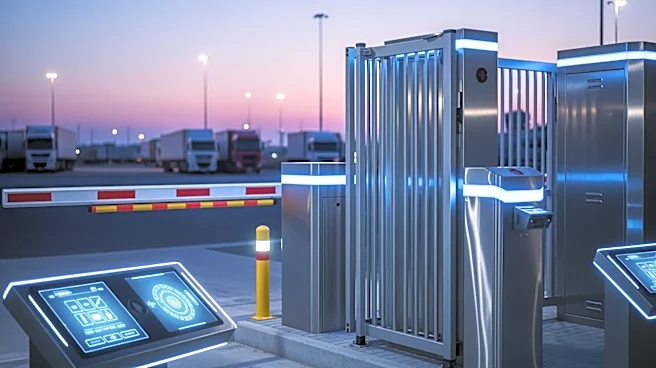
Outpost, a national network of truck terminals based in Austin, Texas, has introduced a second-generation gate automation platform. This update follows the initial release in August 2025 and aims to address significant avoidable costs for supply chain
stakeholders, including shippers, enterprise fleets, and terminal operators. The new platform features a kiosk with expanded machine vision capabilities and operational tools that automate facility gates and security operations. It processes over 3 million gate events annually across Outpost's terminal network. Key improvements include engine-canceling microphones, dual integrated touchscreens for real-time transcription, and turn-by-turn navigation, which reduce check-in times and human intervention. The platform also enhances equipment verification by reading reefer monitor data and verifying seals and latches, providing a timestamped record of trailer conditions.
Why It's Important?
The introduction of this advanced gate automation platform is significant for the logistics and supply chain industry as it promises to improve operational efficiency and reduce costs. By automating processes and enhancing data accuracy, the platform can help shippers and facility operators gain better visibility into gate transactions, leading to more efficient operations. This is particularly beneficial for those handling high-value or temperature-controlled freight, as it ensures consistent and reliable verification of trailer conditions. The platform's ability to quickly deploy and integrate into existing systems also lowers the barrier for facilities looking to enhance their operations, potentially leading to widespread adoption and improved industry standards.
What's Next?
Outpost plans to continue expanding its customer base and enhancing its platform based on real-world feedback from its own network of truck terminals. The company has already signed nearly 50 new locations in the first four months of 2026, indicating strong commercial traction. As the platform continues to evolve, it is likely to incorporate additional features and improvements that address emerging challenges in the logistics sector. Stakeholders can expect ongoing updates that further streamline operations and enhance the user experience for both facility operators and drivers.