


What's Happening?
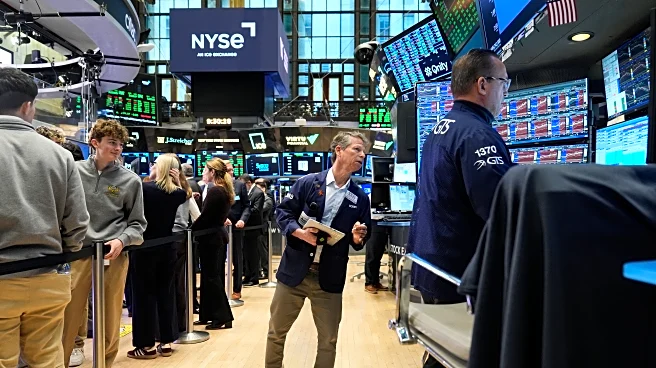
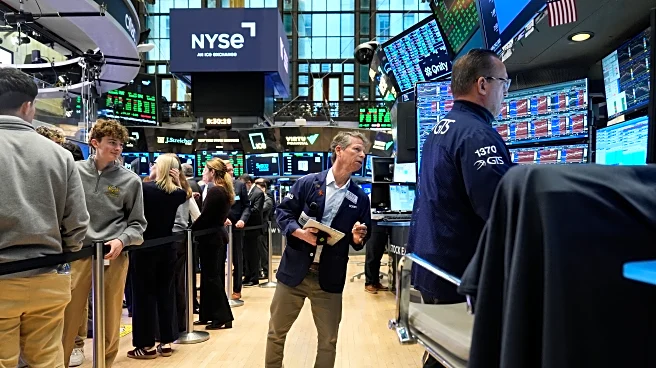
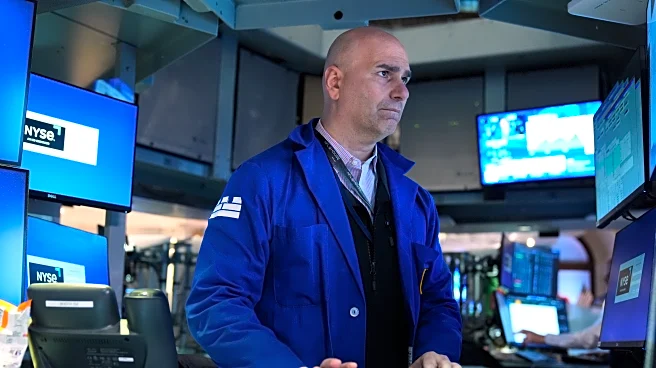
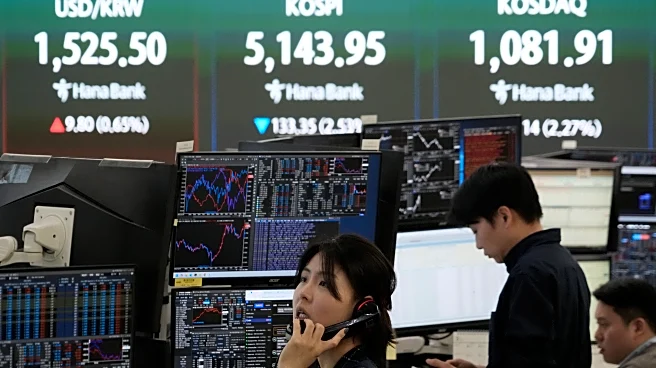
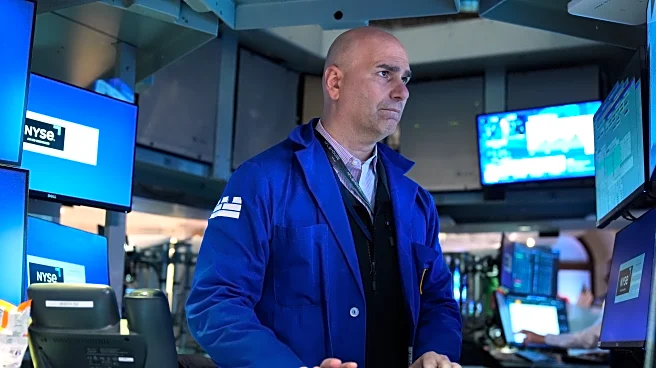
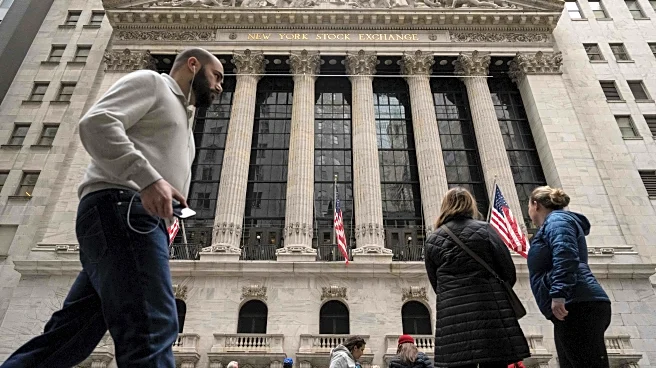
The Dow Jones Industrial Average surged by over 1,000 points, or 2.4%, as speculation arose that the U.S. might end its involvement in the Iran conflict without reopening the Strait of Hormuz. This speculation was fueled by reports suggesting that the White
House is considering such a move, despite the ongoing conflict. The S&P 500 and Nasdaq also saw significant gains, rising by 2.8% and 3.8%, respectively. The market's reaction is partly attributed to the belief that President Trump may reverse his stance, a phenomenon referred to as 'Trump Always Chickens Out' (TACO) by Wall Street. This belief has led traders to anticipate potential policy reversals, impacting market dynamics.
Why It's Important?
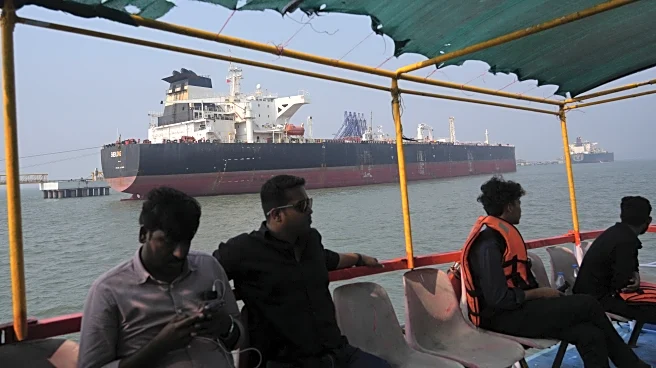
The potential U.S. withdrawal from the Iran conflict without resolving the Strait of Hormuz blockade could have long-lasting economic implications. The continued closure of this critical waterway would maintain high oil prices, affecting global markets. The market's response highlights the influence of political decisions on economic conditions. Traders are capitalizing on the uncertainty, betting on potential policy reversals. This situation underscores the interconnectedness of geopolitical events and financial markets, with significant implications for investors and economic stakeholders.
What's Next?
The market's future trajectory will depend on the U.S. administration's decisions regarding the Iran conflict. Any official confirmation of a withdrawal could lead to further market fluctuations. Traders and investors will closely monitor developments, including any diplomatic efforts to resolve the conflict. The situation remains fluid, with potential for rapid changes in market sentiment based on geopolitical developments. Stakeholders must remain alert to potential shifts in policy and their economic ramifications.