






What's Happening?
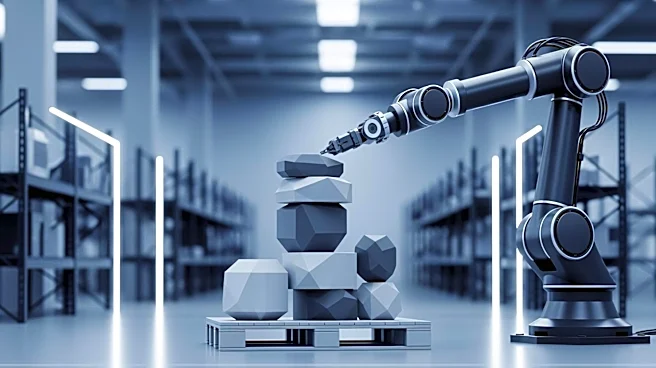
The article discusses the importance of including robotics strategy in supply chain diversification. As warehouses become more automated, the ability to update, change, or scale hardware and software without disrupting operations is crucial for future-proofing
fulfillment. Robotics, once deployed, become part of the risk vector and can be a single point of failure. Diversifying robotic systems provides insurance against vendor issues and ensures operational continuity. The article suggests that swap-ability, or the ability to change technologies or vendors without disrupting throughput, is essential. This requires orchestration across the entire environment to maintain productivity.
Why It's Important?
Incorporating robotics into supply chain strategies is vital for maintaining resilience and adaptability in the face of disruptions. As automation becomes integral to warehouse operations, the ability to seamlessly integrate and switch between different technologies is crucial. This approach mitigates risks associated with vendor dependency and ensures that operations can continue smoothly even if a particular technology fails. By focusing on orchestration and swap-ability, companies can enhance their operational efficiency and reduce the impact of potential disruptions, ultimately leading to more resilient supply chains.
What's Next?
Companies are likely to invest more in developing comprehensive orchestration systems that allow for seamless integration of various robotic technologies. This may involve collaborating with vendors to ensure compatibility and flexibility in their systems. As the demand for automation grows, businesses will need to focus on building adaptable tech stacks that can evolve with changing needs. The emphasis on robotics strategy in supply chain diversification is expected to drive innovation in warehouse management systems and encourage the adoption of more advanced automation solutions.