


What's Happening?
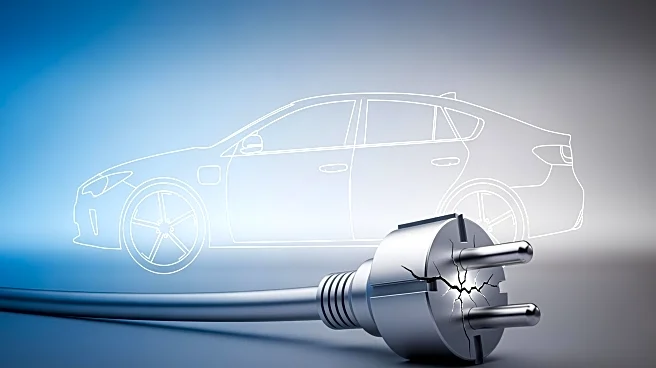
Consumer Reports has released findings indicating that plug-in hybrid electric vehicles (PHEVs) are experiencing significantly more reliability issues compared to traditional internal combustion engine (ICE) vehicles. The report highlights that PHEVs show approximately 80% more problems than their ICE counterparts. Specific complaints from owners include issues with high-voltage batteries, electric motors, charging systems, and electronic glitches. Notably, the Ford Escape PHEV has been criticized for traction-battery replacements and electrical accessory failures, while the Jeep Wrangler and Grand Cherokee 4xe have faced issues with their hybrid systems. Larger SUVs like the Mazda CX-90 PHEV have been reported to have problems with power electronics
and transmission. In the premium segment, the Volvo XC60 PHEV has been noted for power limitations and electrical system failures.
Why It's Important?
The findings from Consumer Reports are significant as they challenge the perceived reliability of PHEVs, which are often marketed as a convenient and environmentally friendly alternative to traditional vehicles. The increased complexity of PHEVs, with their combination of electric and combustion systems, appears to contribute to a higher likelihood of mechanical and electronic failures. This could impact consumer confidence and influence purchasing decisions, potentially affecting the market share of PHEVs. Automakers may need to address these reliability concerns to maintain consumer trust and meet the growing demand for sustainable transportation options.
What's Next?
Automakers are likely to respond to these findings by investing in improving the reliability of their PHEV models. This may involve enhancing the durability of high-voltage batteries and electric motors, as well as refining the integration of electronic systems. Consumer Reports' findings could also prompt potential buyers to conduct more thorough research and test drives before purchasing a PHEV. Additionally, the automotive industry may see increased competition from fully electric vehicles (EVs), which do not have the same hybrid system complexities and may offer a more reliable alternative.