



What's Happening?
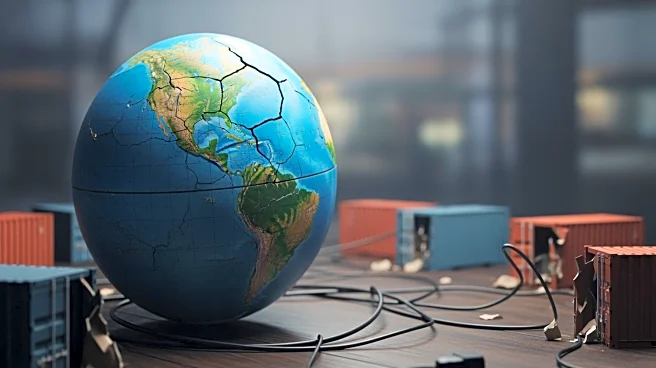
The ongoing conflict in Iran has significantly disrupted global supply chains, particularly affecting the movement of oil tankers through the Strait of Hormuz. This disruption extends beyond oil, impacting the availability and pricing of pharmaceuticals
from India, semiconductors from Asia, and oil-derived products like fertilizers from the Middle East. Cargo ships are either stuck in the Gulf or rerouted around Africa, while air cargo from the Middle East is grounded. The conflict has led to a domino effect, causing congestion and potential shortages worldwide. President Trump has proposed measures to mitigate these disruptions, including political risk insurance for tankers and potential U.S. Navy escorts through the Strait.
Why It's Important?
The disruption in the Strait of Hormuz, a critical chokepoint for global oil and goods transportation, has far-reaching implications for the U.S. and global economies. The potential shortages and price increases in pharmaceuticals and electronics could affect various industries and consumers. The increased costs due to longer shipping routes and higher insurance premiums may lead to inflationary pressures. The situation underscores the vulnerability of global supply chains to geopolitical conflicts, highlighting the need for diversified supply routes and contingency planning.
What's Next?
As the conflict continues, stakeholders are likely to explore alternative shipping routes and increase reliance on political risk insurance. The U.S. government's involvement, including potential naval escorts, may stabilize some aspects of the supply chain. However, prolonged disruptions could lead to strategic shifts in global trade patterns, with companies seeking to reduce dependency on the Middle East. The situation may also prompt discussions on international cooperation to ensure the security of critical trade routes.