



What's Happening?
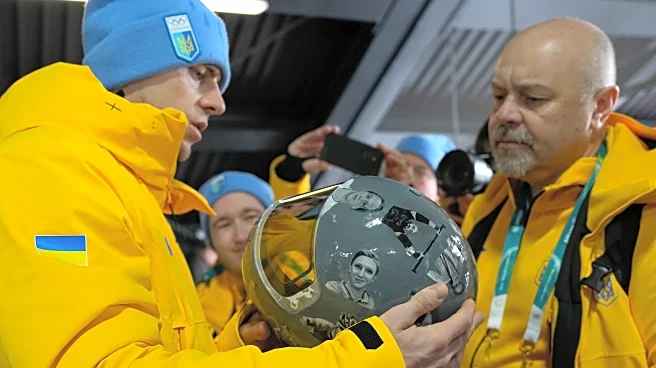
The Court of Arbitration for Sport (CAS) has upheld the disqualification of Ukrainian skeleton racer Vladyslav Heraskevych from the Milano-Cortina 2026 Winter Olympics. Heraskevych was barred from competing due to his use of a helmet that featured images honoring victims of Russia's invasion of Ukraine, which was deemed a violation of Olympic neutrality rules. The CAS ruled that these rules appropriately balance athletes' freedom of expression with the need to maintain political neutrality at the Games. Despite the ban, Olympic officials have allowed Heraskevych to remain at the Games in a non-competing capacity. The International Olympic Committee had offered a compromise allowing the helmet to be displayed before and after races, but Heraskevych declined,
insisting the helmet was a tribute, not a political statement. The case has sparked significant reactions, with Ukraine's luge team showing solidarity and President Volodymyr Zelenskyy praising Heraskevych.
Why It's Important?
This decision underscores the ongoing tension between athletes' rights to free expression and the International Olympic Committee's (IOC) commitment to political neutrality. The ruling may influence future cases where athletes seek to use their platform to address global issues. The decision also highlights the broader geopolitical context, as the conflict in Ukraine continues to impact international sports. The IOC's stance could affect how athletes from conflict-affected regions express solidarity or protest, potentially leading to further debates on the role of sports in political discourse. The case also reflects the challenges faced by international sports bodies in maintaining neutrality while addressing athletes' personal and national sentiments.
What's Next?
The ruling may prompt further discussions within the IOC and other sports organizations about the balance between neutrality and freedom of expression. It could lead to a reevaluation of existing rules to better accommodate athletes' rights while maintaining the apolitical nature of the Games. Stakeholders, including athletes, national Olympic committees, and human rights organizations, may push for clearer guidelines or reforms. Additionally, the decision may influence how future Olympic Games handle similar situations, potentially affecting the participation and actions of athletes from politically sensitive regions.
Beyond the Headlines
The case raises ethical questions about the role of sports in global conflicts and the extent to which athletes can use their platform for advocacy. It also highlights the cultural and emotional significance of sports as a means of national expression and remembrance. The decision may lead to long-term shifts in how international sports events are perceived, potentially affecting their role as platforms for peace and unity. The ongoing debate may also influence public opinion on the responsibilities of athletes and sports organizations in addressing global issues.