
What's Happening?
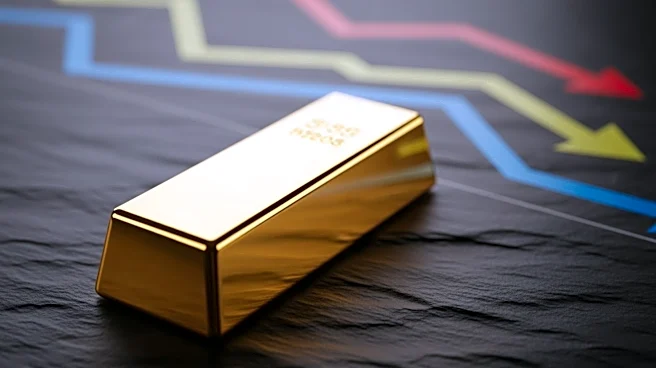
Gold prices are on track for a third consecutive monthly decline, driven by concerns over energy-driven inflation and potential interest rate hikes. Spot gold rose slightly on hopes of a U.S.-Iran ceasefire
but remains down about 2% for the month. The ongoing conflict in Iran has led to higher energy prices, contributing to inflationary pressures. Analysts note that while gold is a hedge against inflation, it faces pressure in high-interest-rate environments. The Federal Reserve's stance on interest rates, influenced by inflation data, is a key factor affecting gold prices.
Why It's Important?
The decline in gold prices reflects broader market concerns about inflation and monetary policy. As a traditional safe-haven asset, gold's performance is closely watched by investors seeking to hedge against economic uncertainties. The potential for higher interest rates could reduce the appeal of non-yielding assets like gold, impacting investment strategies. The geopolitical situation in the Middle East and its effect on energy prices further complicate the economic outlook.
What's Next?
Investors will continue to monitor developments in the U.S.-Iran conflict and its impact on energy prices and inflation. The Federal Reserve's decisions regarding interest rates will be crucial in shaping market expectations and investment strategies. Gold prices may remain volatile as these factors evolve, influencing investor sentiment and market dynamics.