


What's Happening?
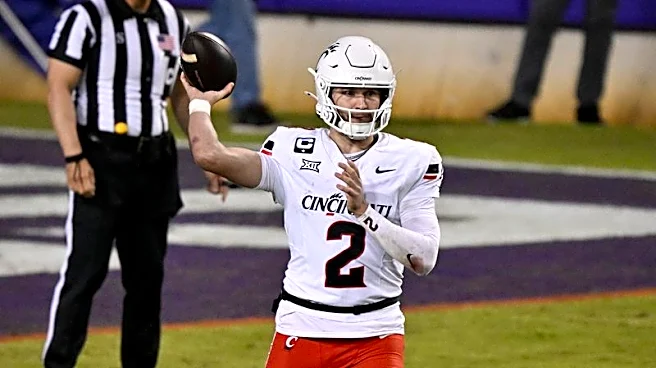
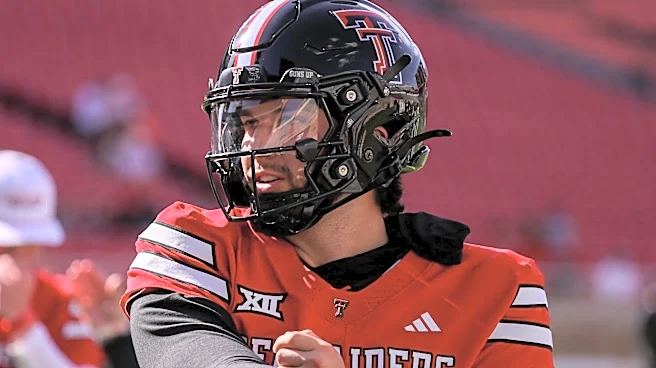
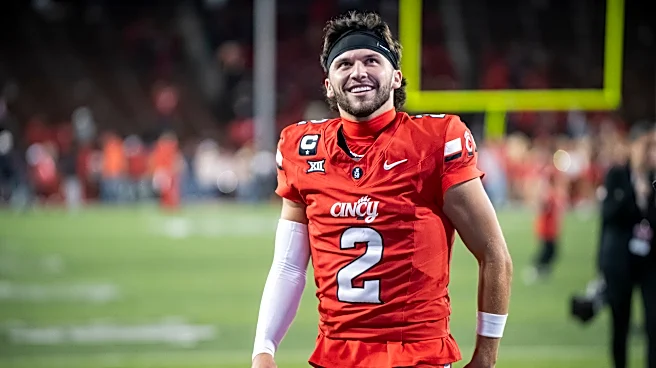
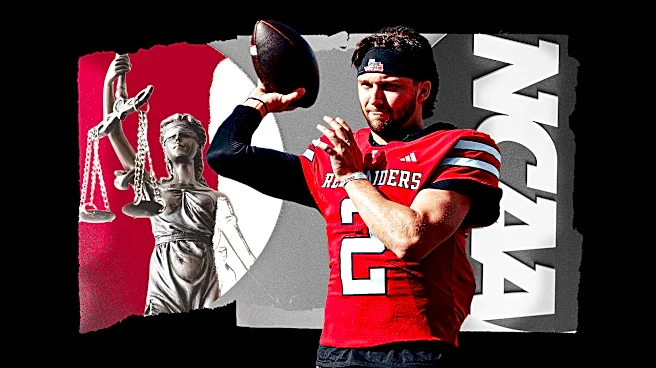
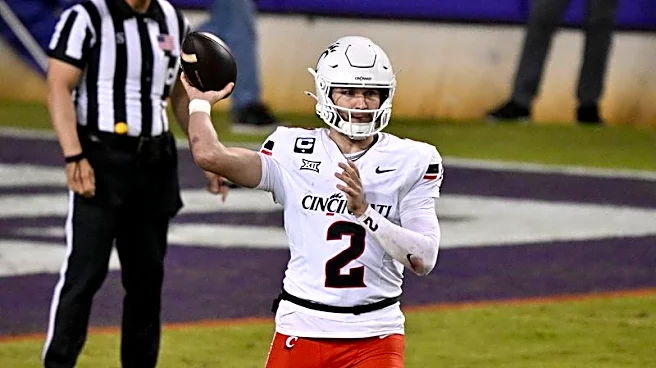
A Texas state court has ruled in favor of Brendan Sorsby, a quarterback for Texas Tech University, allowing him to play next season despite the NCAA's decision to bar him for gambling, including bets on his own team. Judge Ken Curry of the 99th District
Court in Lubbock County issued a temporary injunction against the NCAA's ruling, stating that Sorsby would suffer 'probable, imminent and irreparable injury' if he were unable to participate in football activities. The court's decision mandates a two-game suspension for Sorsby, after which he can return for the Big 12 opener against the University of Houston on September 18. The NCAA, which typically imposes permanent ineligibility for players betting on their own teams, is appealing the decision in Texas's Seventh Court of Appeals.
Why It's Important?
This ruling has significant implications for the NCAA's governance and the integrity of college sports. The NCAA has expressed strong disagreement with the court's decision, citing concerns about the potential destabilizing effects on sports integrity. The case highlights the tension between legal rulings and NCAA regulations, particularly regarding gambling, which is a growing concern in college athletics. The decision could set a precedent for future cases involving student-athletes and gambling, potentially challenging the NCAA's authority and its ability to enforce its bylaws. The reaction from other universities, such as Georgia and Nebraska, which have decided to avoid scheduling Texas Tech in non-conference play, underscores the broader impact on collegiate sports relationships and scheduling.
What's Next?
The NCAA's appeal in the Texas Seventh Court of Appeals will be a critical next step, as the outcome could either reinforce or undermine the NCAA's current stance on gambling violations. The appeal process will be closely watched by other universities and athletic conferences, as it may influence future policy decisions and enforcement actions. Additionally, the ongoing discussions among Big 12 coaches and administrators suggest that there may be further collective actions or policy adjustments in response to the ruling. The case also raises questions about the role of state courts in NCAA governance and the potential for increased legal challenges to NCAA decisions.