





What's Happening?
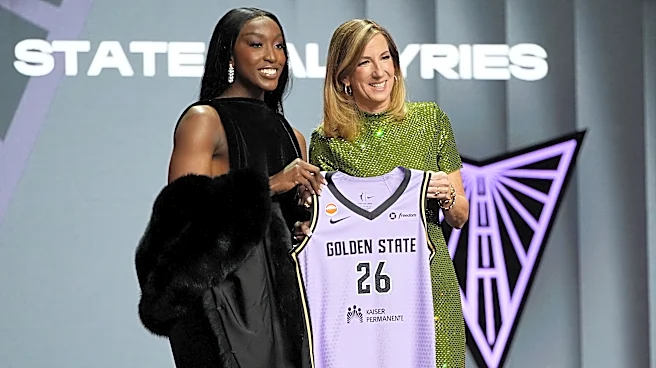
Flau'jae Johnson, a new entrant to the WNBA, is part of the first rookie class to benefit from the league's new Collective Bargaining Agreement (CBA). This agreement, negotiated by the WNBA Players Association, has resulted in unprecedented compensation
levels for rookies, marking a significant milestone in the league's history. Johnson expressed her gratitude for joining the league at such a pivotal time, emphasizing her commitment to leaving a positive legacy for future generations. The new CBA aims to improve player salaries and working conditions, reflecting the league's growth and the increasing recognition of women's sports.
Why It's Important?
The new CBA represents a landmark achievement for the WNBA, setting a precedent for player compensation and rights in women's sports. By securing higher salaries and better conditions, the agreement not only benefits current players but also enhances the league's appeal to future talent. This development is crucial for the WNBA's competitiveness and sustainability, as it aligns with broader societal movements advocating for gender equality in sports. The increased financial incentives could attract more top-tier athletes, thereby raising the league's profile and potentially boosting viewership and sponsorship opportunities.
What's Next?
As the WNBA continues to implement the new CBA, stakeholders will likely monitor its impact on player satisfaction and league performance. The success of this agreement could influence other sports leagues to adopt similar measures, promoting equity across the sports industry. Additionally, the league may explore further initiatives to enhance player welfare and expand its fan base. The ongoing dialogue between players and management will be crucial in ensuring that the benefits of the CBA are fully realized and that the league continues to evolve in response to players' needs.