



What's Happening?
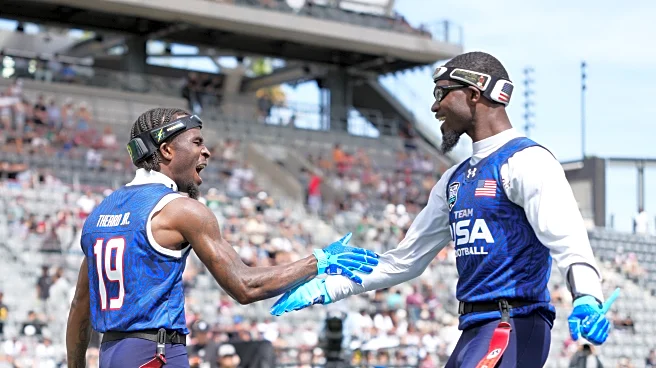
The inaugural Fanatics Flag Football Classic, held at BMO Stadium in Los Angeles, experienced a significant lack of attendance, with many empty seats visible during the event. Despite the presence of high-profile figures like Tom Brady, the event struggled
to draw a large crowd. Several factors contributed to this outcome, including the recent relocation of the event to Los Angeles, the non-tackle nature of flag football, and the fact that it is not currently football season. The event's low turnout highlights the challenges faced by flag football in gaining popularity among traditional football fans. The United Football League (UFL) has encountered similar issues, prompting a shift to smaller venues like soccer stadiums to better match audience sizes.
Why It's Important?
The low attendance at the Fanatics Flag Football Classic underscores the difficulties in promoting flag football as a mainstream sport in the United States. Despite efforts by the NFL to popularize flag football, the event's turnout suggests that there is still a significant gap between traditional football and its non-tackle counterpart in terms of fan engagement. This situation could impact future investments and sponsorships in flag football, as stakeholders may be hesitant to support a sport that struggles to attract large audiences. Additionally, the event's outcome may influence the strategic decisions of sports organizations looking to diversify their offerings and appeal to a broader audience.
What's Next?
Moving forward, organizers of flag football events may need to reassess their marketing strategies and venue choices to better align with audience expectations and preferences. Engaging with local communities and leveraging the popularity of figures like Tom Brady could be crucial in building a more substantial fan base. Additionally, the NFL and other sports organizations might explore partnerships with schools and youth programs to introduce flag football at a grassroots level, potentially fostering a new generation of fans. The success of these initiatives will likely determine the future trajectory of flag football as a viable sport in the U.S.