



What's Happening?
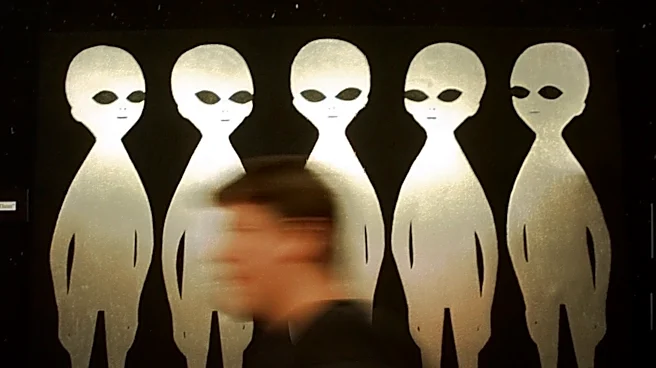
Hollywood has played a pivotal role in shaping public perceptions of UFOs and extraterrestrial life for decades. The film industry has depicted aliens in various forms, from friendly visitors to hostile invaders, influencing how Americans envision intelligent
life beyond Earth. This cultural phenomenon is now intersecting with real-world developments, as government agencies consider releasing classified information on UFOs and extraterrestrials. President Trump's recent call for transparency on these matters has reignited public interest and speculation. The narrative crafted by Hollywood, with films like 'E.T.' and 'Close Encounters of the Third Kind,' continues to impact societal views on the possibility of extraterrestrial contact.
Why It's Important?
The intersection of Hollywood's storytelling and potential government disclosures on UFOs could significantly alter public understanding and acceptance of extraterrestrial life. Hollywood's influence has prepared the public for the possibility of such revelations, potentially easing societal reactions. The entertainment industry's portrayal of aliens often reflects human fears and aspirations, serving as a mirror to societal issues. As discussions about UFOs gain traction, the role of media in shaping public discourse becomes increasingly relevant, highlighting the power of storytelling in influencing perceptions and policy.
Beyond the Headlines
The potential release of government files on UFOs raises questions about transparency and the public's right to know. It also prompts ethical considerations regarding the portrayal of extraterrestrial life and the impact of such narratives on cultural and scientific understanding. Hollywood's influence extends beyond entertainment, affecting how society grapples with the unknown and the implications of potential contact with intelligent life. This development could lead to a reevaluation of how media shapes public consciousness and the responsibilities of storytellers in representing speculative realities.