


What's Happening?
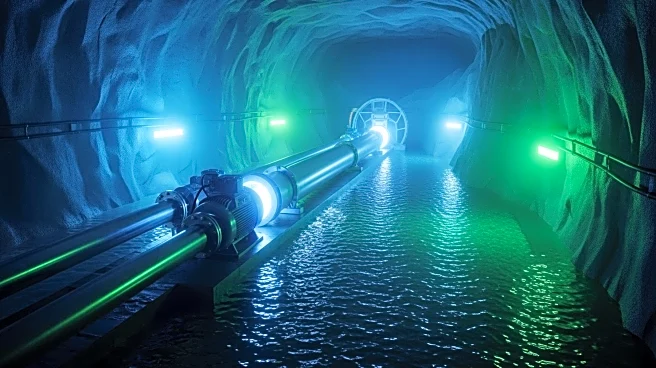
A new approach to pumped hydro energy storage is being developed by the US startup Quidnet, which aims to overcome the traditional requirement for mountainous terrain. Quidnet's system utilizes underground rock formations to create reservoirs, allowing for energy storage without the need for high elevations. This innovation is part of a broader trend in the energy sector to find more sustainable and economical solutions for power generation. The concept involves using excess electricity from renewable sources like wind and solar to pump water into these reservoirs during low demand periods. When energy demand increases, the stored water is released to generate electricity, leveraging gravity to drive turbines. This method has been a part of the US energy landscape
for nearly a century, but Quidnet's approach could expand its applicability by removing geographical constraints.
Why It's Important?
The development of Quidnet's pumped hydro energy storage system is significant as it addresses a major limitation of traditional hydro storage—geographical dependency on mountainous regions. By enabling energy storage in areas without high elevations, this technology could significantly increase the number of viable sites for hydro storage, thus enhancing the grid's capacity to integrate renewable energy sources. This is crucial for the transition to a more sustainable energy system, as it provides a reliable method to store and dispatch renewable energy, which is often intermittent. The ability to store energy efficiently and economically could reduce reliance on fossil fuels, decrease greenhouse gas emissions, and support energy security. Additionally, this innovation aligns with broader energy policy goals to diversify energy sources and improve grid resilience.
What's Next?
Quidnet's technology is still in the development phase, with successful demonstrations reported. The next steps involve scaling up the technology and identifying suitable sites for deployment. The company is likely to seek partnerships with energy providers and investors to fund and implement large-scale projects. Regulatory approvals and environmental assessments will also be necessary to ensure compliance and address any potential impacts. As the technology matures, it could attract interest from policymakers and industry stakeholders looking to enhance energy storage capabilities. The success of this initiative could pave the way for similar innovations in the energy sector, further driving the adoption of renewable energy solutions.
Beyond the Headlines
The implications of Quidnet's technology extend beyond energy storage. By utilizing underground rock formations, the system minimizes land use and environmental disruption compared to traditional hydro storage, which often requires large surface reservoirs. This could lead to more sustainable land management practices and reduce conflicts over land use. Additionally, the technology could stimulate economic development in regions lacking traditional hydro resources, creating jobs and fostering innovation in the energy sector. The approach also highlights the potential for cross-disciplinary collaboration, as it combines principles from geology, engineering, and renewable energy to create a novel solution.