







What's Happening?
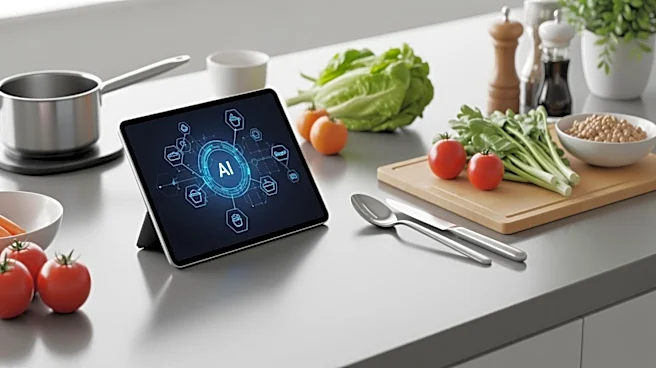
Two chefs, Meenu Bhasin and Melanie Underwood, are leveraging generative AI to streamline operations in their solo cooking businesses. Bhasin, who runs a cooking company in the Bay Area, uses AI tools like ChatGPT to adapt recipes quickly, especially
when faced with dietary restrictions such as egg allergies. This technology allows her to create alternative recipes on the fly, reducing stress and enhancing her ability to cater to diverse client needs. Similarly, Underwood, a culinary educator, employs AI to tailor her program materials and manage event logistics efficiently. By using AI to multiply recipe ingredients and list necessary equipment, she can focus more on the creative aspects of her work. Both chefs emphasize that while AI aids in operational tasks, the human element remains crucial in cooking and teaching.
Why It's Important?
The integration of AI in small business operations, particularly in the culinary sector, highlights a significant shift towards technology-driven efficiency. For solopreneurs like Bhasin and Underwood, AI provides a competitive edge by enabling them to manage complex tasks without a full-time team. This approach not only reduces operational burdens but also allows for personalized client experiences, which can enhance customer satisfaction and business reputation. The use of AI in this context demonstrates its potential to support small businesses in scaling operations and innovating service delivery, which could lead to broader adoption across various industries.
What's Next?
As AI continues to evolve, its role in small business operations is likely to expand. Chefs like Bhasin and Underwood may explore further applications of AI, such as developing new revenue streams or enhancing marketing strategies. The success of AI in these solo ventures could inspire other small business owners to adopt similar technologies, potentially leading to a more widespread transformation in how small businesses operate. Additionally, as AI tools become more sophisticated, they may offer even more advanced solutions for managing client interactions and personalizing services.
Beyond the Headlines
The use of AI in culinary businesses raises questions about the balance between technology and human expertise. While AI can handle logistical tasks, the essence of cooking—flavor development, creativity, and personal interaction—remains inherently human. This dynamic underscores the importance of maintaining a human touch in service-oriented industries, even as technology becomes more integrated. Furthermore, the ethical implications of AI in business, such as data privacy and the potential for job displacement, warrant careful consideration as these technologies become more prevalent.