



What's Happening?
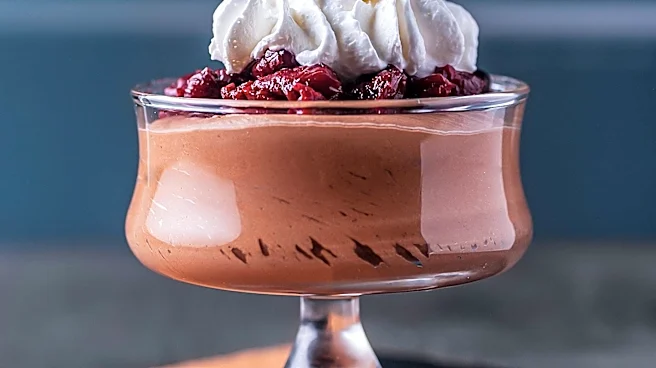
Liz Heinecke, known as the 'Kitchen Pantry Scientist,' delves into the scientific principles that make chocolate mousse a delightful dessert. In a recent segment, Heinecke explains the chemistry involved in creating the perfect texture and flavor of chocolate mousse.
The process involves understanding the role of ingredients like chocolate, eggs, and cream, and how they interact at a molecular level to produce the mousse's signature light and airy consistency. Heinecke's exploration highlights the importance of temperature control and the physical changes that occur during the whipping and folding stages, which are crucial for achieving the desired mousse texture.
Why It's Important?
Understanding the science behind cooking not only enhances culinary skills but also fosters a deeper appreciation for the art of cooking. By breaking down the chemical reactions and physical processes involved in making chocolate mousse, Heinecke provides valuable insights that can help both amateur and professional chefs improve their techniques. This knowledge can lead to more consistent results in the kitchen and inspire creativity in developing new recipes. Additionally, such educational content can engage audiences in STEM fields by demonstrating practical applications of scientific concepts in everyday life.