









What's Happening?
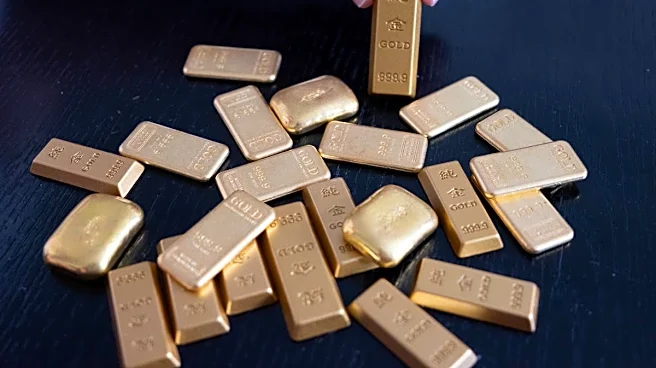
Gold prices have experienced a decline, setting the stage for a weekly loss due to ongoing concerns about inflation and potential interest rate hikes by the U.S. Federal Reserve. As of Friday, spot gold was down 0.5% at $4,191.17 per ounce, marking a weekly loss of 3.2%.
This downturn follows a period of geopolitical tension, particularly related to the conflict in Iran, which has driven up energy costs and inflation fears. The U.S. producer prices saw a significant increase in May, marking the largest annual gain in over three years, further fueling concerns about inflation. Traders are currently anticipating a 60% chance of a U.S. rate hike in December, according to the CME Group's FedWatch tool. Additionally, President Trump has indicated the possibility of a peace deal with Iran, which could impact the geopolitical landscape and economic conditions.
Why It's Important?
The decline in gold prices is significant as it reflects broader economic concerns, particularly regarding inflation and interest rates. Gold is traditionally seen as a hedge against inflation, and its price movements can indicate investor sentiment about economic stability. The potential for a U.S. Federal Reserve rate hike could increase the opportunity cost of holding non-yielding assets like gold, leading to further price declines. This situation also highlights the interconnectedness of geopolitical events and economic indicators, as tensions in the Middle East have directly influenced energy prices and inflation expectations. The outcome of potential peace negotiations between the U.S. and Iran could further impact global markets and economic policies.
What's Next?
Looking ahead, market participants will closely monitor signals from the Federal Reserve regarding interest rate decisions. Any indication of a rate hike could further pressure gold prices. Additionally, developments in the U.S.-Iran peace negotiations could alter the geopolitical landscape, potentially affecting energy prices and inflation. Investors will also watch for changes in holdings of gold-backed exchange-traded funds, as shifts in these investments can influence market dynamics. The broader economic implications of these developments will be significant for financial markets and policy decisions.