







What's Happening?
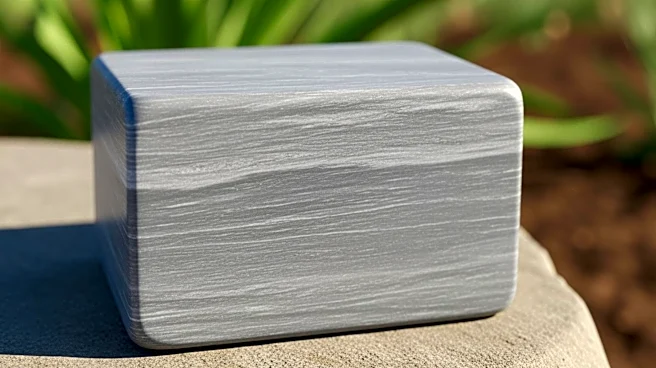
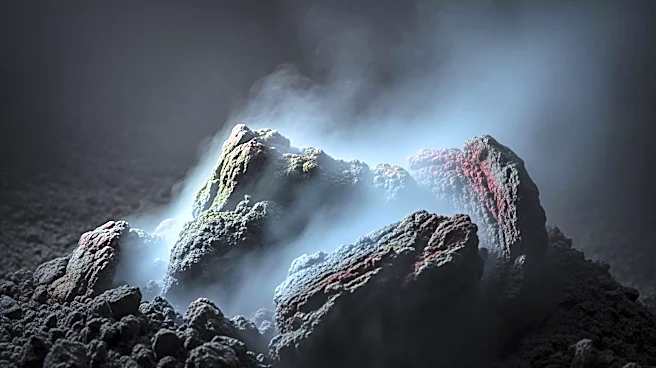
A new magnesium silicate binder has been developed as a sustainable alternative to traditional Portland cement, promising significant reductions in CO2 emissions. This binder, derived from ultramafic rocks like serpentinite, becomes hydraulically active
after thermal and mechanical activation. The binder's development is inspired by natural geochemical processes and aims to provide a carbon-neutral route for cement manufacture. The production process involves mining, heat-treating, and grinding serpentinite rock, resulting in a highly reactive powder that forms magnesium silicate hydrates upon mixing with water. This innovation is particularly relevant as the cement industry seeks to reduce its carbon footprint, given that traditional cement production is a major source of CO2 emissions.
Why It's Important?
The introduction of magnesium silicate binder as a sustainable construction material could significantly impact the cement industry by reducing its carbon emissions. Traditional cement production is responsible for approximately 600 kg of CO2 per ton of clinker produced, whereas the new binder's production process does not release such emissions. Additionally, the lower kiln temperatures required for its production can be achieved through electric heating, potentially making the process carbon-neutral if powered by renewable energy. This development aligns with global efforts to mitigate climate change by reducing industrial carbon footprints. The widespread availability of serpentinite and other ultramafic rocks further supports the feasibility of this alternative on a global scale.
What's Next?
The next steps involve scaling up the production of magnesium silicate binder and integrating it into the construction industry. This will require further research and development to optimize the production process and ensure the binder's performance in various applications. Additionally, the industry will need to address potential challenges such as the safe handling of serpentinite, which can release asbestos fibers during processing. As the cement industry transitions to more sustainable practices, collaboration with stakeholders, including governments and environmental organizations, will be crucial to facilitate the adoption of this new technology.
Beyond the Headlines
The shift to magnesium silicate binder could lead to broader changes in the construction industry, including the development of new standards and regulations for sustainable building materials. This transition may also drive innovation in related sectors, such as the development of new additives and reinforcement materials compatible with the binder. Furthermore, the successful implementation of this technology could serve as a model for other industries seeking to reduce their environmental impact through material innovation.