






What's Happening?
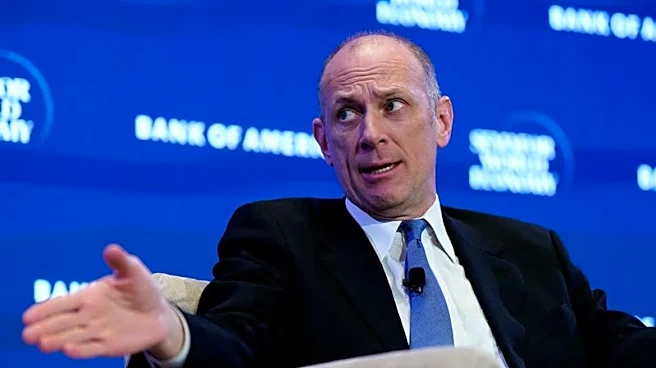
Neel Kashkari, President of the Federal Reserve Bank of Minneapolis, emphasized the importance of controlling inflation over focusing on the labor market. Speaking at the Bank of Japan-IMES Conference, Kashkari stated that inflation remains significantly
above the Federal Reserve's target of 2%, despite the labor market being in decent shape. He warned that prolonged high inflation could lead to unanchored inflation expectations, necessitating more aggressive responses. Kashkari attributed the current inflationary pressures to factors such as the Covid-19 pandemic, tariffs, and geopolitical conflicts, including the war in Ukraine and Iran. He also discussed the potential impact of artificial intelligence on productivity and monetary policy, noting that while AI could lead to sustained higher productivity, its short-term implications remain uncertain.
Why It's Important?
The Federal Reserve's focus on inflation control is crucial for maintaining economic stability. High inflation can erode purchasing power and destabilize financial markets, affecting both consumers and businesses. By prioritizing inflation control, the Federal Reserve aims to prevent inflation expectations from becoming unanchored, which could lead to more drastic economic measures. This approach may impact interest rates and monetary policy decisions, influencing borrowing costs and investment strategies. Additionally, the discussion on artificial intelligence highlights the potential for technological advancements to affect productivity and economic growth, which could alter the Federal Reserve's policy trajectory in the future.
What's Next?
The Federal Reserve is likely to continue monitoring inflation trends closely, adjusting monetary policy as needed to maintain price stability. Stakeholders, including businesses and investors, will be watching for any changes in interest rates or policy announcements that could impact economic conditions. The ongoing geopolitical conflicts and their effects on global markets will also be a focus, as they contribute to inflationary pressures. The role of artificial intelligence in shaping productivity and economic growth will be an area of interest, with potential implications for long-term monetary policy decisions.