







What's Happening?
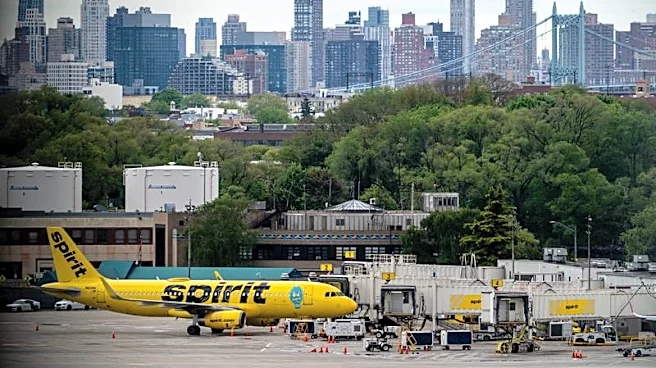
Spirit Airlines has announced the cessation of its operations after 34 years in business, citing the inability to manage increased oil prices and other financial pressures without additional funding. The airline, known for its ultra-low-cost model, had
been operating under Chapter 11 bankruptcy protection and was seeking a government bailout, which was not secured. The shutdown has resulted in the loss of jobs for most of its 17,000 employees. The airline's financial struggles were exacerbated by the COVID-19 pandemic, rising operating costs, and growing debt. Spirit had previously filed for bankruptcy protection twice, with the most recent filing in August 2025, reporting $8.1 billion in debts. The Trump administration had considered a bailout, but no agreement was reached. Other airlines, including United, Delta, and JetBlue, have introduced rescue fares to assist affected passengers.
Why It's Important?
The shutdown of Spirit Airlines marks a significant shift in the U.S. airline industry, particularly affecting budget-conscious travelers who relied on its low-cost fares. The closure could lead to reduced competition in the airline market, potentially resulting in higher airfares. The loss of 17,000 jobs also represents a substantial economic impact, affecting employees and their families. The situation highlights the vulnerability of airlines to external economic pressures, such as rising oil prices and geopolitical conflicts, which can significantly impact operational costs. The failure to secure a government bailout underscores the challenges faced by companies in obtaining financial support during economic downturns.
What's Next?
In the wake of Spirit Airlines' shutdown, affected passengers are seeking refunds and alternative travel arrangements. The U.S. Transportation Secretary has indicated that a reserve fund is available for customers who purchased tickets directly from Spirit. Other airlines are offering discounted fares to assist stranded passengers. The airline industry may see further consolidation as remaining carriers absorb Spirit's market share. Additionally, the closure may prompt discussions on the need for regulatory changes or support mechanisms to prevent similar situations in the future. The impact on employees will likely lead to increased demand for job placement assistance and retraining programs.
Beyond the Headlines
The closure of Spirit Airlines raises questions about the sustainability of the ultra-low-cost business model in the face of economic volatility. The airline's provocative marketing strategies and no-frills service approach had disrupted the industry, but financial instability ultimately led to its downfall. The situation also reflects broader economic challenges, such as the impact of international conflicts on domestic industries. The failure to secure a bailout may lead to debates on the role of government intervention in private sector crises, particularly in industries deemed essential for national connectivity and economic stability.