


What's Happening?
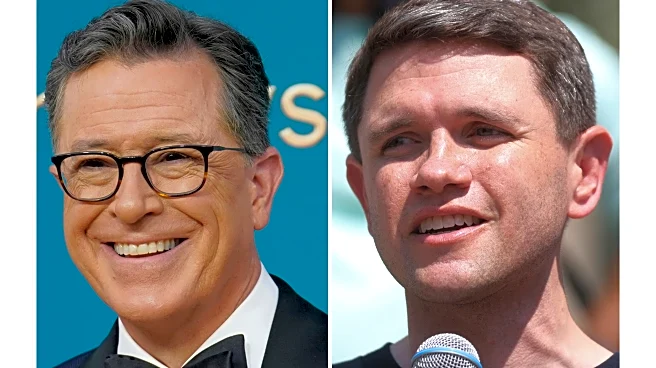
Stephen Colbert, host of 'The Late Show,' accused CBS of blocking his interview with Texas state Rep. James Talarico, citing concerns over the FCC's 'equal time' rule. This rule requires networks to provide equal airtime to political candidates, though talk shows have historically been exempt. Colbert revealed that CBS's legal team instructed him not to air the interview or discuss the matter on air, a directive he chose to ignore. He criticized FCC Chair Brendan Carr for suggesting the exemption should no longer apply to late-night shows, while excluding right-wing talk radio from similar scrutiny. Colbert argued that the FCC's actions are politically motivated, aiming to silence criticism of President Trump. Despite the network's restrictions,
Colbert conducted the interview on 'The Late Show's' YouTube channel, highlighting the network's financial motivations behind the decision.
Why It's Important?
The controversy highlights the ongoing debate over media regulation and political content on television. The potential enforcement of the 'equal time' rule on late-night shows could reshape the landscape of political interviews, limiting the ability of shows to feature political candidates. This situation raises questions about the balance between regulatory compliance and editorial freedom, as well as the role of media companies in political discourse. The incident also reflects broader concerns about media consolidation and the influence of regulatory bodies on content, particularly in politically sensitive contexts. The outcome of this dispute could have significant implications for how media companies navigate similar challenges in the future.
What's Next?
The FCC has not yet formally implemented the rule change, leaving the future of political interviews on late-night shows uncertain. If enforced, networks may need to adjust their programming to comply with the new regulations, potentially affecting the content and format of shows like 'The Late Show.' Media companies might also seek legal challenges to the FCC's decision, arguing for the preservation of editorial freedom. The broader media landscape could see shifts as networks explore alternative platforms, such as streaming services, to circumvent broadcast regulations. Stakeholders, including political candidates and media advocacy groups, are likely to monitor developments closely, as the decision could influence the accessibility and diversity of political discourse on television.