



What's Happening?
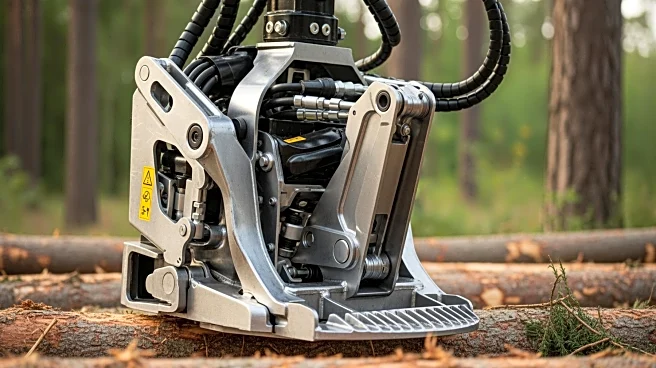
Kesla has announced the release of its new harvester head models, the 20SH-II Advance and 25SH-II Advance, which are designed to improve productivity in timber harvesting. These models feature optimized hydraulics, an optional tilt lock function, and proportional pressure control. Additionally, the delimbing blades have been redesigned for increased strength, and new sensor solutions have been introduced for measuring length and stroke position. The durability of these models has been enhanced by strengthening material thickness in critical areas and making design changes to the tilt arm. Improvements have also been made to hydraulic hoses and electrical wire harnesses to boost reliability. The models offer expanded configuration options to better
meet customer needs, and deliveries began in early 2026 to Japan, with plans to replace previous models in other markets during the first quarter of 2026.
Why It's Important?
The introduction of these advanced harvester head models by Kesla is significant for the timber industry as it promises to enhance productivity and operational efficiency. By offering features that cater to challenging environments and tree species, these models can potentially reduce operational costs and increase output for timber companies. The improvements in durability and reliability are likely to minimize downtime and maintenance costs, which are critical factors in the competitive forestry sector. As Kesla is a market leader in stroke harvesters, these updates could further solidify its position and influence industry standards, impacting stakeholders across the timber supply chain.
What's Next?
As the new models are rolled out, timber companies and forestry operators will likely evaluate the performance and cost-effectiveness of these harvester heads. The industry may see a shift towards adopting these advanced models, especially in regions with challenging harvesting conditions. Kesla's competitors might respond by introducing similar innovations to maintain their market share. Additionally, the feedback from early adopters in Japan and other markets will be crucial in determining the success and potential improvements for future iterations of these models.