



What's Happening?
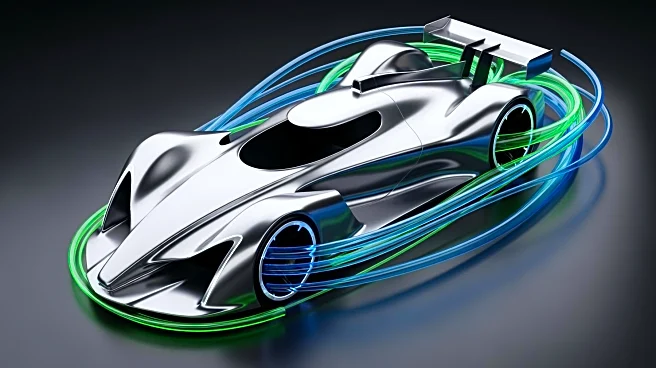
Aston Martin has unveiled its new AMR26 Formula 1 car, showcasing a revolutionary design that departs significantly from conventional F1 design philosophies. The car made its debut in Barcelona, driven by Lance Stroll, with Fernando Alonso set to take over in subsequent sessions. The AMR26 features a distinctive wide-section nose cone and compact pylons connecting to the front wing, creating a seagull-like appearance. The sidepods incorporate upward-facing periscope-style air inlets, a departure from the letterbox-style trend. The car's aerodynamic package, which required extended development time for approval, includes a triangular power unit air intake and a substantial shark fin on the engine cover. The design emphasizes an extreme Coke-bottle
philosophy, with a narrow rear section and innovative suspension systems. The car's development was delayed due to inconsistencies between simulator and wind tunnel data, but the final design reflects Aston Martin's commitment to innovation.
Why It's Important?
The unveiling of the AMR26 is significant for the Formula 1 industry as it represents a bold step in aerodynamic design, potentially influencing future car designs across the grid. Aston Martin's approach challenges traditional design norms, which could lead to shifts in competitive dynamics if the car performs well in upcoming tests. The focus on innovative aerodynamics may push other teams to explore unconventional designs, fostering technological advancements in the sport. The success of the AMR26 could enhance Aston Martin's reputation and competitiveness in F1, impacting team strategies and sponsorships. Additionally, the car's performance in the Bahrain tests will be closely watched, as it could set new benchmarks for aerodynamic efficiency and performance.
What's Next?
The next critical phase for the AMR26 is the upcoming Bahrain tests, where its performance capabilities will be evaluated. These tests will provide insights into the car's competitiveness and reliability, influencing Aston Martin's strategy for the 2026 F1 season. The results could prompt other teams to reassess their designs and strategies, potentially leading to a ripple effect in the F1 community. Stakeholders, including sponsors and technical partners, will be keenly observing the outcomes, which could affect future collaborations and investments. The team's ability to translate its innovative design into on-track success will be pivotal in shaping its season prospects.