
What's Happening?
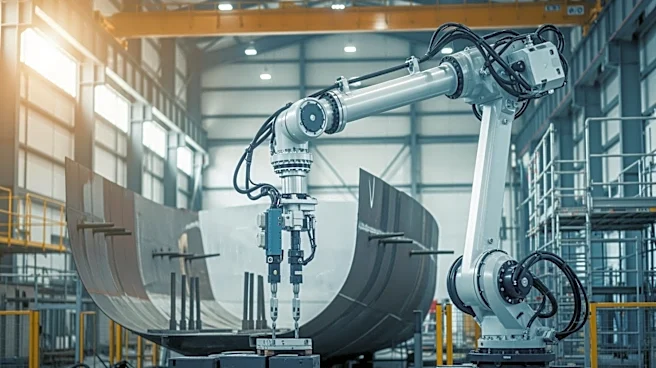
The energy sector is increasingly turning to large-scale metal additive manufacturing (AM) to overcome supply chain challenges associated with traditional forging and casting processes. As lead times for critical
components extend beyond twelve months, companies like Fastech Engineering are leveraging AM technologies to regain control over their supply chains. The use of wire arc additive manufacturing (WAAM) and laser-wire directed energy deposition (LW-DED) allows for faster production and reduced machining costs, making it a viable alternative for high-value components with complex geometries.
Why It's Important?
The adoption of large-scale metal AM in the energy sector is significant as it addresses critical supply chain bottlenecks, offering a more flexible and efficient manufacturing solution. This shift can lead to reduced dependency on traditional manufacturing processes, potentially lowering costs and improving lead times for essential components. For energy companies, this means enhanced operational efficiency and the ability to maintain infrastructure more effectively. The broader impact includes potential shifts in manufacturing strategies and supply chain management across the industry.
What's Next?
As the energy sector continues to explore AM technologies, the focus will likely be on expanding the qualification and certification processes necessary for widespread adoption. Companies will need to invest in developing robust material datasets and inspection protocols to ensure the reliability of 3D printed components. The success of these efforts could pave the way for broader implementation of AM in other industries facing similar supply chain challenges. Additionally, the ongoing development of AM technologies may lead to further innovations in manufacturing and supply chain strategies.