






What's Happening?
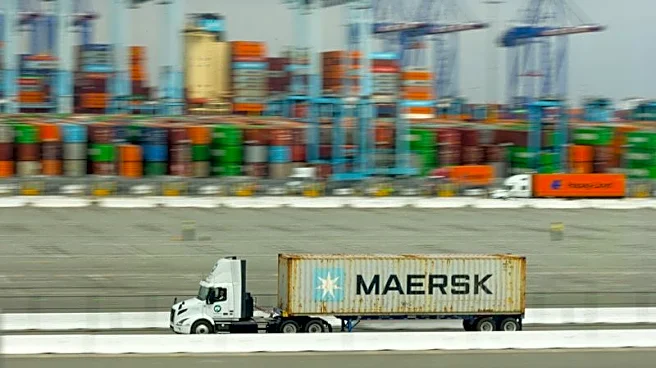
The CEO of Maersk, Vincent Clerc, has highlighted the significant impact of the ongoing war in Iran on the global shipping industry. The conflict has led to the closure of the Strait of Hormuz, a critical chokepoint for global oil supply, causing oil prices
to soar above $100 per barrel. This situation has resulted in Maersk incurring an additional $500 million in monthly costs due to increased energy expenses. The company, which is responsible for shipping about 14% of global containerized goods, has had to suspend key vessel crossings and is facing logistical challenges with six ships stranded in the Gulf. Despite efforts to manage costs, Maersk is unable to absorb the entire financial burden and may need to pass some of these costs onto consumers.
Why It's Important?
The ongoing conflict in Iran and the resulting disruptions in oil supply have far-reaching implications for the global economy, particularly in the shipping sector. As one of the largest shipping companies, Maersk's challenges reflect broader issues in global logistics and energy supply chains. The increased costs could lead to higher prices for consumers and businesses worldwide, potentially slowing economic growth. The situation also underscores the vulnerability of global trade to geopolitical tensions, highlighting the need for diversified energy sources and more resilient supply chains. The potential for prolonged high oil prices could further strain industries reliant on fuel, such as airlines, which are already facing financial difficulties.
What's Next?
The future of the global shipping industry and oil prices largely depends on the resolution of the conflict in Iran. Peace talks between the U.S. and Iran could potentially reopen the Strait of Hormuz, alleviating some of the current pressures. However, if the conflict persists, companies like Maersk will need to continue navigating these challenges, possibly leading to further cost increases for consumers. The situation may also prompt businesses to explore alternative shipping routes and energy sources to mitigate risks. Stakeholders in the shipping and energy sectors will be closely monitoring developments in the Middle East for any signs of resolution or escalation.