



What's Happening?
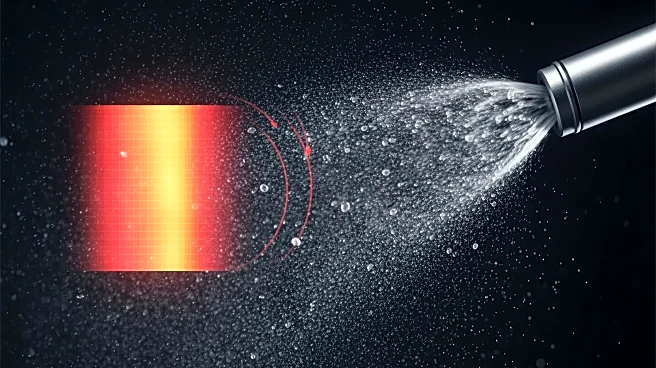
Plumis, a UK-based technology company, has introduced a new fire safety system called Automist to the U.S. market. Unlike traditional fire sprinkler systems that require large water tanks and can cause significant water damage, Automist uses subtle metal panels connected directly to a home's existing plumbing. These panels, customizable in color and finish, flip to reveal misting nozzles when a connected smoke detector senses a fire. The system employs thermal imaging to accurately locate the fire source, allowing for precise mist deployment. According to Plumis, Automist can activate up to 14 times faster than conventional sprinkler systems and uses only about 10% of the water, minimizing potential damage to home interiors.
Why It's Important?
The introduction
of Automist represents a significant advancement in home fire safety technology, particularly for U.S. homeowners concerned about the limitations of traditional sprinkler systems. By eliminating the need for large water tanks and reducing water usage, Automist offers a more practical and less intrusive solution. This innovation is particularly beneficial for historical homes or regions prone to freezing weather and earthquakes, where traditional systems may be less effective. The system's ability to integrate with existing plumbing and its use of thermal imaging for precise fire detection could set a new standard in residential fire safety, potentially reducing property damage and enhancing occupant safety.
What's Next?
As Automist enters the U.S. market, its adoption may depend on factors such as cost, ease of installation, and consumer awareness. Plumis suggests that the system is best installed during home remodeling due to its need for customization. The company has not disclosed pricing, which could influence its accessibility to a broader audience. As awareness of the system grows, it may prompt further innovations in fire safety technology and influence building codes and insurance policies. Stakeholders such as homeowners, builders, and insurers will likely monitor its performance and impact closely.