






What's Happening?
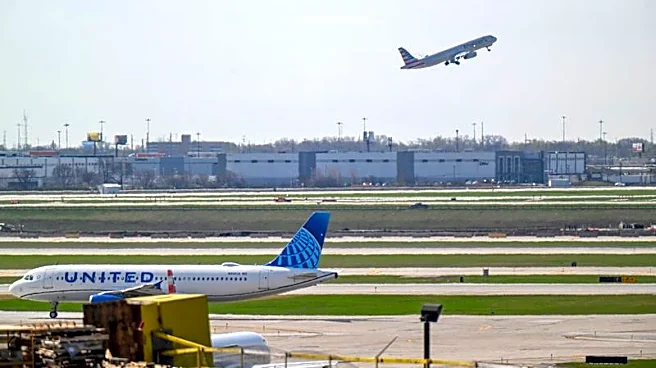
United Airlines has announced that it may need to increase fares by up to 20% in response to a significant surge in fuel prices. This development comes amid broader economic challenges affecting the airline industry, including fluctuating fuel costs and
geopolitical tensions. The airline is evaluating its pricing strategy to offset the increased operational costs, which have been exacerbated by the ongoing situation in Iran. The potential fare hike is part of United Airlines' efforts to maintain financial stability and continue providing services without compromising on quality.
Why It's Important?
The potential fare increase by United Airlines highlights the broader impact of geopolitical events on the airline industry. Rising fuel prices can significantly affect operational costs, leading to higher ticket prices for consumers. This situation underscores the vulnerability of airlines to external economic factors, which can influence travel demand and profitability. If United Airlines proceeds with the fare hike, it could set a precedent for other carriers facing similar challenges, potentially leading to widespread fare increases across the industry. This could affect consumer travel behavior and the overall economic recovery of the sector.
What's Next?
As United Airlines considers its next steps, the airline industry will be closely monitoring fuel price trends and geopolitical developments. Other airlines may also reassess their pricing strategies in response to similar pressures. Stakeholders, including passengers and industry analysts, will be watching for official announcements regarding fare adjustments. Additionally, there may be discussions within the industry about alternative strategies to mitigate fuel cost impacts, such as fuel hedging or operational efficiencies. The outcome of these deliberations could influence future pricing models and industry practices.