
What's Happening?
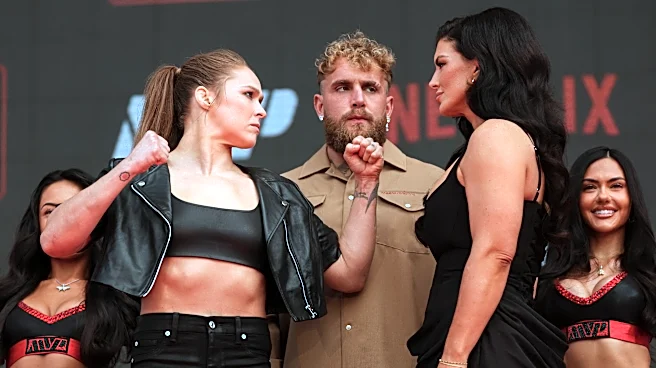
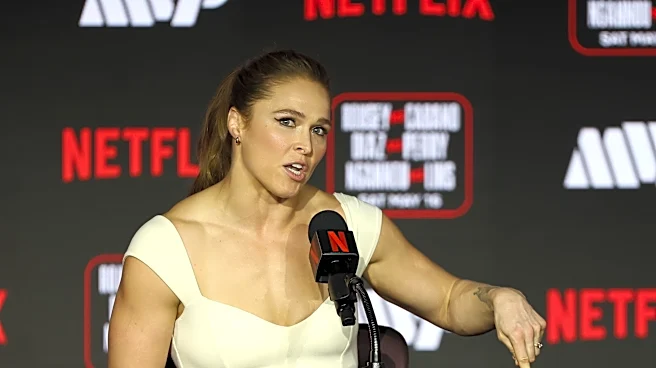
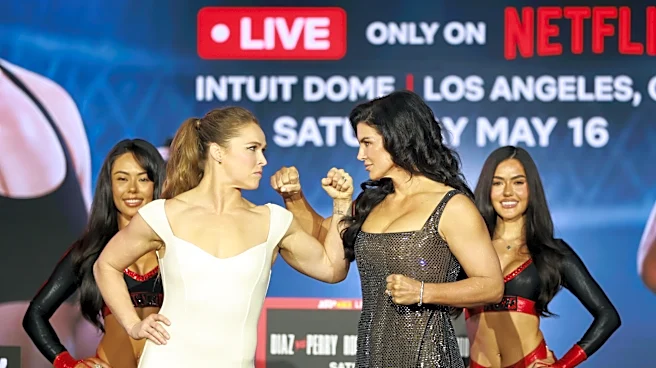
Ronda Rousey, a former UFC champion, is set to return to mixed martial arts (MMA) to face Gina Carano in a highly anticipated match. This event marks Rousey's return to the sport after a decade-long hiatus
following her last fight in 2016, where she suffered a defeat against Amanda Nunes. Rousey's comeback is not about reclaiming her former glory but rather seeking closure for her MMA career, which ended abruptly and left her with unresolved feelings. The fight will take place on May 16 at the Intuit Dome in Inglewood, California, and will be the main event of the first MMA card to air on Netflix. Rousey has expressed that this fight is an opportunity to rewrite the ending of her MMA story, which she felt was left incomplete.
Why It's Important?
Rousey's return to MMA is significant as it highlights the ongoing evolution of women's roles in combat sports. Her comeback could inspire other athletes who have faced similar challenges in their careers. Additionally, the event being aired on Netflix represents a shift in how MMA is consumed, potentially reaching a broader audience and increasing the sport's popularity. Rousey's decision to fight outside the UFC also raises questions about fighter compensation and the business practices of major MMA organizations. Her actions could influence future negotiations and contracts for fighters, potentially leading to better financial terms and conditions.
What's Next?
Following the fight, Rousey plans to move to Hawaii with her family, where she hopes to live a quieter life. However, she has not ruled out the possibility of becoming a promoter or opening a martial arts academy for children. Her future involvement in MMA, whether as a promoter or mentor, could have a lasting impact on the sport, particularly in terms of promoting women's participation and advocating for better treatment of fighters. The outcome of her fight with Carano may also influence her next steps, as a victory could bolster her position in the MMA community.
Beyond the Headlines
Rousey's return to MMA also sheds light on the personal struggles athletes face, such as dealing with fame, health issues, and the pressure to perform. Her story underscores the importance of mental health and the need for support systems for athletes transitioning out of competitive sports. Additionally, her willingness to address past health concerns, such as concussion symptoms, highlights the ongoing conversation about athlete safety and the long-term effects of head injuries in contact sports.