




What's Happening?
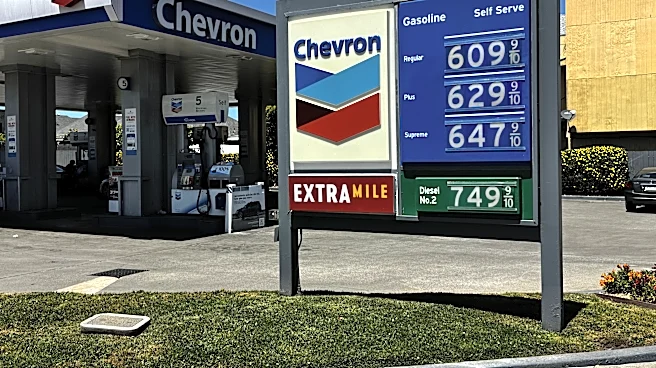
As gasoline prices soar to a national average of $4.55 per gallon, Americans are exploring ways to reduce fuel costs. The high prices, exacerbated by the ongoing conflict in Iran, have led to increased interest in electric vehicles (EVs) and alternative
transportation methods. California, with the highest gasoline prices, is seeing a public feud between Governor Gavin Newsom and Chevron over fuel costs. Despite the high prices, many Americans continue to drive, with some opting for more fuel-efficient vehicles or considering EVs. Experts suggest that driving habits, such as smooth acceleration and proper vehicle maintenance, can also help reduce fuel consumption.
Why It's Important?
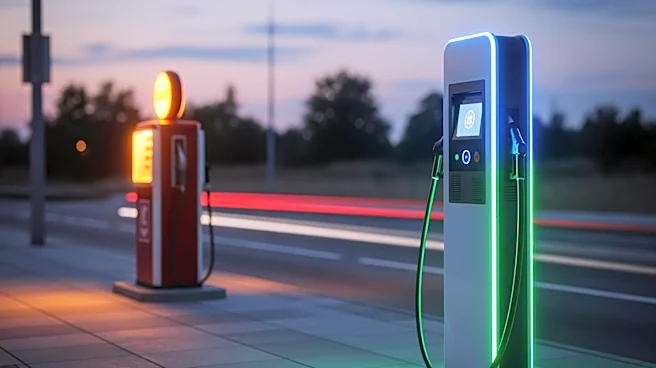
The current fuel price situation is pushing consumers to rethink their transportation choices, potentially accelerating the transition to electric vehicles. This shift could have significant implications for the automotive industry, energy policy, and environmental goals. As more consumers consider EVs, there may be increased demand for charging infrastructure and incentives to support the transition. The situation also highlights the economic impact of fuel prices on household budgets, as consumers adjust spending to accommodate higher transportation costs.
What's Next?
If gasoline prices remain elevated, the trend towards electric vehicles and alternative transportation is likely to continue. Policymakers may introduce additional incentives to encourage the adoption of EVs and support infrastructure development. The automotive industry may also respond by increasing the availability and affordability of electric vehicles. In the long term, this shift could contribute to reduced carbon emissions and a more sustainable transportation system. Consumers will need to weigh the costs and benefits of transitioning to electric vehicles, considering factors such as charging availability and overall cost savings.