


What's Happening?
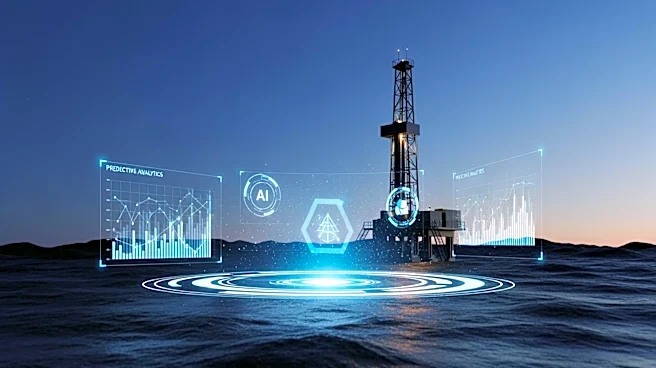
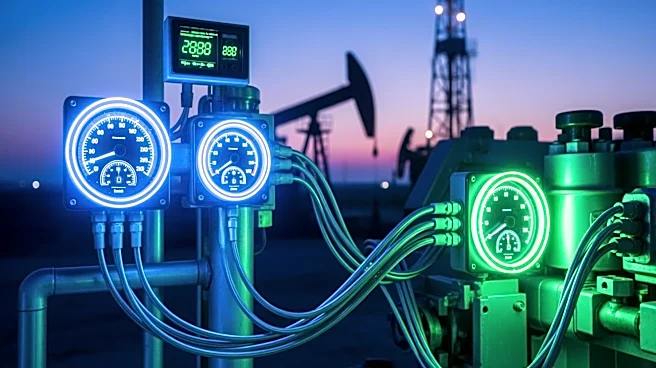
Artificial intelligence (AI) and digital technologies are revolutionizing the oil and gas industry by enhancing drilling, production management, and operational cost reduction. AI-driven analytics are optimizing frac stages, sand volumes, and well spacing,
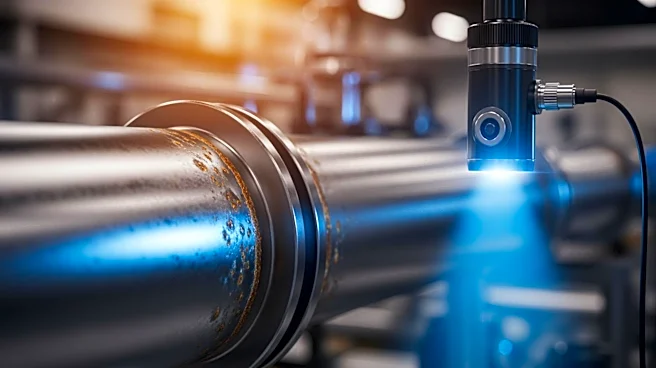
leading to more productive wells. Predictive maintenance, powered by AI, is becoming a significant value driver, allowing operators to detect performance changes before equipment failures occur. This proactive approach is particularly valuable in LNG facilities, refineries, and offshore operations, where downtime can be costly. The industry is also seeing a cultural shift, with companies hiring more software developers and AI specialists alongside traditional energy professionals.
Why It's Important?
The integration of AI in the oil and gas sector is expected to generate hundreds of billions of dollars in additional value over the next decade. This transformation supports goals such as improving capital efficiency, reducing emissions, maximizing recovery, and maintaining profitability during volatile commodity cycles. By enabling operators to produce more with fewer rigs and lower downtime, AI is reshaping the competitive landscape of the industry. The shift towards digital transformation is not only about technological advancement but also about cultural change, as companies adapt to a more data-intensive operational model.
What's Next?
As AI continues to be integrated into oilfield operations, companies will likely increase their investments in digital technologies to further enhance operational efficiencies and recovery rates. The adoption of digital twins and AI-assisted imaging systems will continue to transform seismic interpretation and reservoir characterization. The industry will need to address challenges such as data quality and legacy systems to fully realize the potential of AI. The ongoing digital transformation will require a workforce skilled in both traditional energy operations and advanced digital technologies.