



What's Happening?
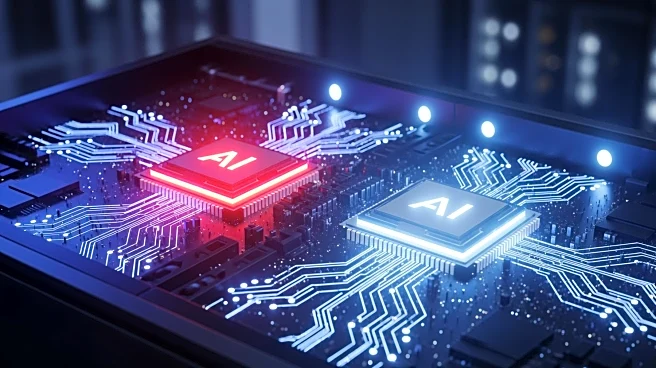
Shares of Nvidia and Advanced Micro Devices (AMD) moved in opposite directions following an announcement by Arista Networks' CEO, Jayshree Ullal. Ullal revealed that Arista is shifting some of its AI workloads from Nvidia to AMD. This shift marks a significant change in the AI chip market, where Nvidia has historically dominated with a 90% market share. Arista Networks, known for its Ethernet switching technology, is diversifying its deployments, with AMD now accounting for 20% to 25% of its AI workload deployments. This development comes as Nvidia has started developing its own networking technology, reducing its reliance on Arista. The announcement led to a nearly 3% drop in Nvidia's stock, while AMD's stock saw a close to 1% increase.
Why It's Important?
This
shift in AI workload deployment from Nvidia to AMD by Arista Networks is significant for several reasons. Firstly, it indicates a growing acceptance and preference for AMD's technology in sectors traditionally dominated by Nvidia. This could potentially alter the competitive landscape in the AI chip market, where Nvidia has been the leader. For AMD, this represents an opportunity to increase its market share and influence in the AI sector, potentially leading to increased revenue and market valuation. For Nvidia, the shift could signal a need to innovate and adapt to maintain its market dominance. The broader impact on the tech industry includes potential changes in partnerships and technology development strategies among major players.
What's Next?
As Arista Networks continues to diversify its AI workload deployments, other companies may follow suit, leading to increased competition in the AI chip market. Nvidia may need to enhance its offerings or develop new strategies to retain its market share. AMD, on the other hand, could capitalize on this momentum to further penetrate the AI sector. The tech industry will likely see more collaborations and partnerships as companies seek to optimize their AI capabilities. Stakeholders will be closely monitoring these developments to assess their impact on market dynamics and future technology trends.