
What's Happening?
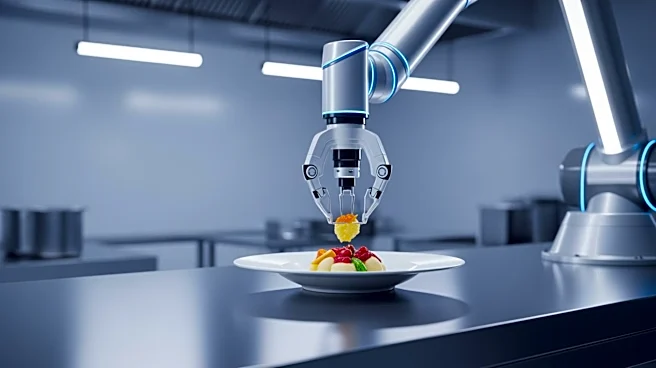
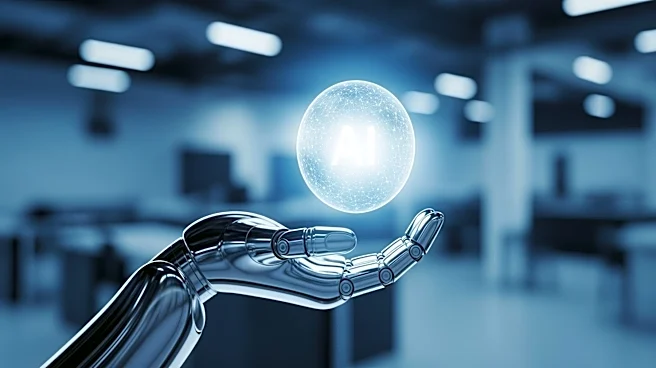
Advancements in AI are extending beyond digital applications into the physical world, with robots now being developed to perform everyday tasks such as washing dishes and sweeping floors. These robots,
powered by 'physical AI,' are designed to learn and adapt through trial and error, much like humans. Companies like Agile Robots and tech entrepreneurs such as Elon Musk and Jeff Bezos are at the forefront of this innovation. The technology is being applied in various fields, including surgery and manufacturing, with robots capable of performing complex tasks and even building other robots.
Why It's Important?
The development of physical AI represents a significant leap in robotics, with the potential to revolutionize industries by automating routine tasks and enhancing productivity. This technology could lead to increased efficiency in sectors such as manufacturing, healthcare, and logistics, reducing the need for human labor in repetitive tasks. The implications for the workforce are profound, as it may shift the nature of jobs and require new skills. Additionally, the integration of AI in physical tasks could drive further innovation and economic growth, positioning the U.S. as a leader in advanced robotics.
What's Next?
As physical AI continues to evolve, its applications are expected to expand, potentially transforming various industries. Companies investing in this technology will likely focus on refining robot capabilities and exploring new use cases. The development of 'self-driving factories' and other automated systems could become more prevalent, leading to changes in manufacturing processes and supply chains. Stakeholders, including policymakers and industry leaders, will need to address the ethical and societal implications of widespread automation, ensuring that the benefits of this technology are equitably distributed.