






What's Happening?
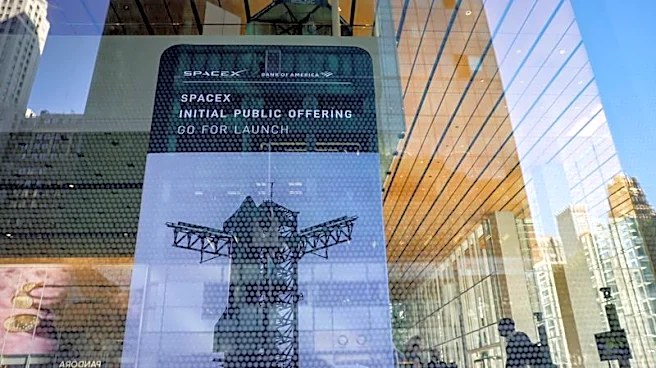
The SpaceX IPO is poised to become a significant event on Wall Street, with the company aiming to raise $75 billion at a valuation of $1.75 trillion. This valuation places SpaceX among the top 10 most valuable companies in the U.S., surpassing even Tesla.
The IPO is expected to generate substantial underwriting fees, with 23 banks, including Goldman Sachs and Morgan Stanley, participating. JPMorgan Chase CEO Jamie Dimon is actively involved in promoting the IPO, participating in a special event alongside SpaceX's COO Gwynne Shotwell and CFO Bret Johnson. This involvement is notable as it is uncommon for a CEO of Dimon's stature to directly promote an IPO, highlighting the importance of the offering to Wall Street, especially given current market conditions and concerns about an AI bubble.
Why It's Important?
The SpaceX IPO represents a major opportunity for Wall Street, with potential underwriting fees of around $500 million. The involvement of high-profile figures like Jamie Dimon underscores the significance of the offering. The IPO's success is crucial for Wall Street, particularly as market valuations are high and there are concerns about an AI bubble. The unconventional approach to the IPO, with a pre-set share price of $135, adds pressure on banks to secure buyers. The offering's scale, aiming to raise more than any previous IPO, necessitates finding new investors beyond the typical institutional pool. This event could set a precedent for future large-scale IPOs and impact investor confidence in the tech sector.
What's Next?
As the SpaceX IPO approaches, banks will continue efforts to attract investors, leveraging their networks and hosting events to promote the offering. The success of the IPO could influence future tech IPOs, particularly those involving AI companies like Anthropic and OpenAI. Market reactions to the IPO's pricing and execution will be closely watched, potentially affecting investor sentiment and strategies. The outcome may also impact how future IPOs are structured, especially for high-valuation tech companies.