


What's Happening?
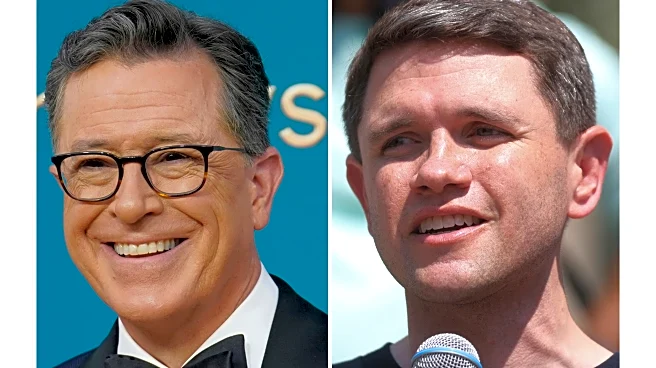
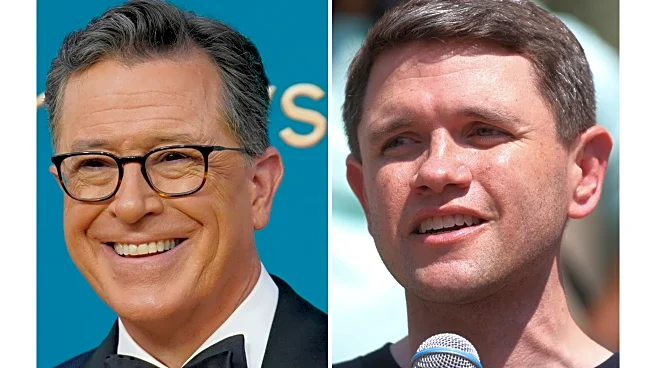
Stephen Colbert, host of 'The Late Show,' has publicly criticized CBS for not airing an interview with Texas state representative James Talarico, a Democrat and critic of President Trump. Colbert claims that CBS lawyers advised against broadcasting the interview due to potential violations of the FCC's equal-time rule, which mandates that broadcast networks provide equal airtime to all political candidates. Talarico is currently running for Senate in a competitive primary. CBS, however, denies prohibiting the interview, stating that 'The Late Show' was given legal guidance and options to comply with the rule. Instead of airing the interview on television, it was released on YouTube, which is not subject to the FCC rule. Colbert has suggested
that the decision was influenced by CBS's parent company, Paramount Global, which was seeking regulatory approval for a merger with Skydance Media.
Why It's Important?
This incident highlights ongoing tensions between media outlets and regulatory bodies over political content. The FCC's equal-time rule is designed to ensure fairness in political broadcasting, but its application can lead to disputes over media freedom and censorship. Colbert's criticism of CBS and the FCC underscores concerns about corporate influence on media content, especially in the context of political reporting. The situation also reflects broader debates about the role of media in political discourse and the potential for regulatory decisions to impact editorial independence. The controversy may affect public perceptions of media bias and the integrity of political coverage, particularly in an election year.
What's Next?
The fallout from this incident could lead to further scrutiny of the FCC's equal-time rule and its application to political content on television. Media companies may need to navigate these regulations carefully to avoid similar controversies. Additionally, the merger between Paramount Global and Skydance Media, which Colbert suggests influenced CBS's decision, could face increased public and regulatory scrutiny. Political figures and media watchdogs may call for clearer guidelines on the application of the equal-time rule to ensure it does not stifle political discourse. The situation may also prompt discussions about the role of digital platforms like YouTube in circumventing traditional broadcast regulations.