
What's Happening?
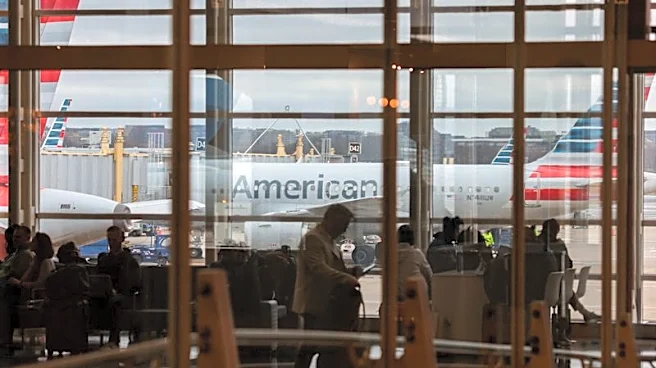
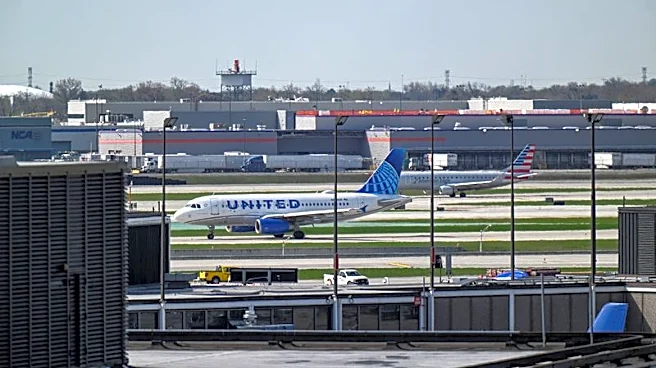
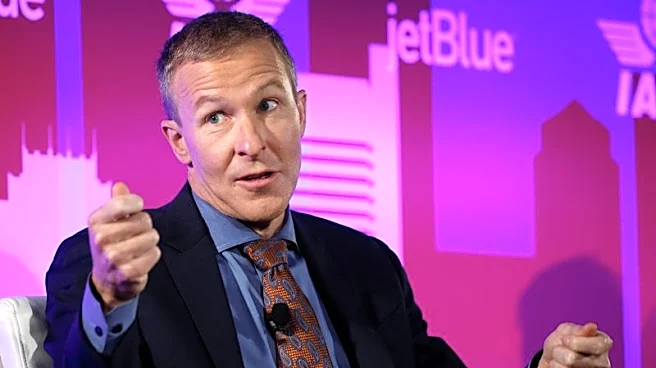
United Airlines CEO Scott Kirby has pitched a merger with American Airlines during a meeting with President Trump at the White House. The proposal aims to create a combined airline that could better compete
globally. However, the merger faces significant antitrust challenges due to the already consolidated domestic airline industry. United and American Airlines together would control over a third of the U.S. domestic market, raising concerns about reduced competition and higher prices for consumers. Despite the skepticism, the proposal has led to a surge in stock prices for both airlines, indicating investor optimism.
Why It's Important?
The potential merger between United and American Airlines could reshape the airline industry by further consolidating market power among major carriers. This consolidation could lead to increased prices and reduced service options for consumers, as competition diminishes. The proposal also highlights the challenges of navigating regulatory hurdles in a highly consolidated industry. Previous mergers have faced similar scrutiny, with regulators blocking deals that would eliminate low-cost competitors and drive up fares. The outcome of this proposal will have significant implications for the future of airline competition and consumer choice.
What's Next?
The merger proposal is likely to face intense regulatory scrutiny, with antitrust authorities closely examining the potential impact on competition and consumer prices. The Department of Justice has previously challenged similar mergers, and state attorneys general could also oppose the deal. If the merger proceeds, United and American may need to divest certain assets to satisfy regulatory concerns. The proposal's success will depend on the airlines' ability to address these challenges and demonstrate the benefits of the merger to regulators and consumers.