




What's Happening?
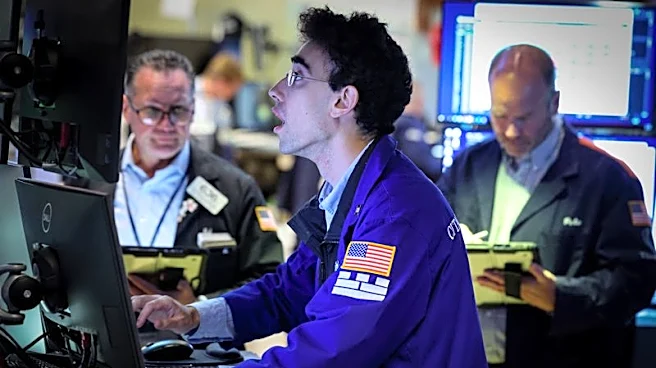
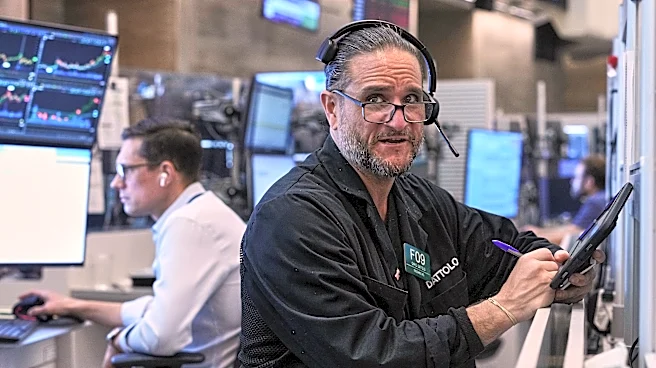
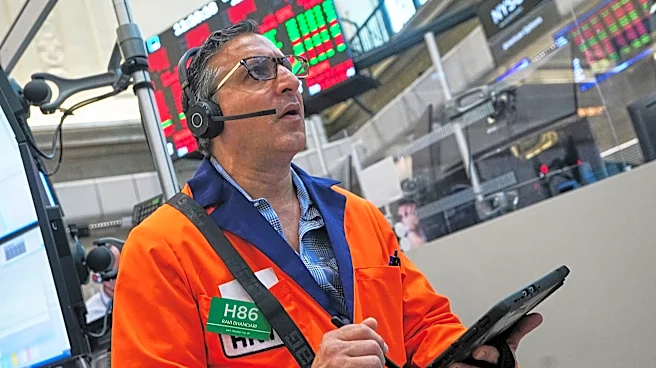
The U.S. stock market experienced a sharp decline as a result of a sell-off in artificial intelligence (AI) stocks. The S&P 500 fell by 1.6%, marking its first consecutive drop in three weeks, while the Dow Jones Industrial Average decreased by 953 points,
or 1.9%. The Nasdaq composite also saw a 2% decline. This downturn follows a period of rapid growth in AI stock prices, which have now faced scrutiny and a subsequent drop. Companies like Super Micro Computer and Nvidia, which have been significant players in the AI sector, saw substantial declines in their stock values. Super Micro Computer's announcement to raise $7 billion through stock sales contributed to its 28% drop, while Nvidia's stock fell by 3.7%. The market's volatility is partly attributed to concerns over inflated AI stock prices and potential investor shifts in anticipation of upcoming high-profile AI company IPOs.
Why It's Important?
The sell-off in AI stocks highlights the volatility and speculative nature of the current market environment, particularly concerning AI investments. The rapid rise and subsequent fall of AI stock prices underscore the risks associated with market bubbles, where investor enthusiasm can lead to overvaluation. This situation poses a challenge for investors and companies alike, as it may lead to a reassessment of AI's long-term value and impact on the market. Additionally, the decline in stock prices could affect investor confidence and lead to broader market instability. The situation also reflects the broader economic implications of high oil prices and inflation, which continue to influence market dynamics and investor decisions.
What's Next?
Investors and market analysts will likely monitor the situation closely to determine whether the recent sell-off is a temporary correction or the beginning of a more prolonged downturn in AI stocks. The upcoming IPOs of major AI companies could further influence market trends and investor behavior. Additionally, the Federal Reserve's interest rate decisions, in response to inflation and economic conditions, will be crucial in shaping future market movements. Companies in the AI sector may need to adjust their strategies to address investor concerns and maintain confidence in their growth potential.