

What's Happening?
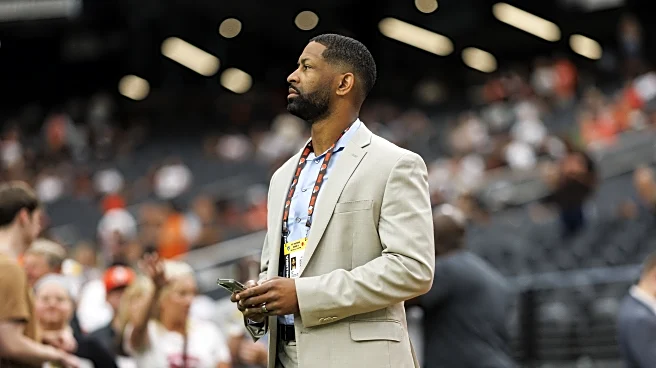
Jim Schwartz, the former defensive coordinator for the Cleveland Browns, has resigned from his position with the expectation that he will not coach in 2026. This development follows the Browns' decision to appoint Todd Monken as the new head coach, bypassing Schwartz for the role. Despite his resignation, Schwartz remains under contract with the Browns through 2026, with the team holding an option for 2027. The situation is complicated by the lack of a negotiated separation agreement, leaving Schwartz without a clear path to another coaching position. The Browns and Schwartz are engaged in a 'game of chicken,' as Schwartz's future in coaching remains uncertain. The possibility of Schwartz joining another team, such as the Las Vegas Raiders,
is hindered by the contractual obligations and the inability to trade assistant coaches.
Why It's Important?
The resignation of Jim Schwartz from the Browns highlights the complexities and challenges within NFL coaching contracts and team dynamics. Schwartz's situation underscores the strategic maneuvers teams and coaches must navigate when career paths and team decisions diverge. The Browns' decision to pass over Schwartz for the head coach position could impact team morale and performance, as well as Schwartz's career trajectory. The potential for Schwartz to join another team, like the Raiders, could influence coaching strategies and team compositions across the league. This situation also raises questions about the negotiation processes and contractual obligations that bind coaches to teams, affecting their mobility and career opportunities.
What's Next?
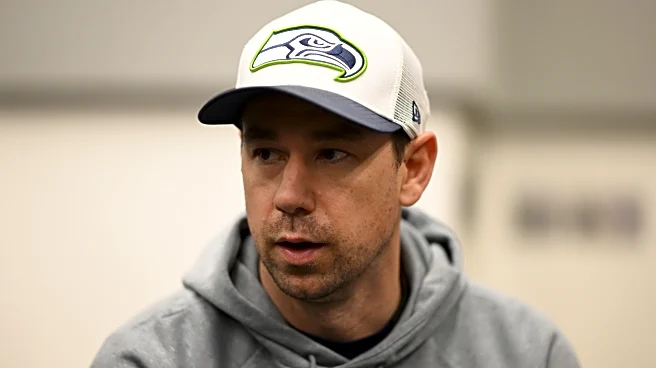
The future for Jim Schwartz remains uncertain as he is contractually bound to the Browns, limiting his immediate coaching opportunities. If the Raiders, under potential new head coach Klint Kubiak, express interest in Schwartz, informal negotiations involving player or draft pick trades could occur. Such a move would require the Browns to release Schwartz from his contract, a decision that could set a precedent for handling similar situations in the NFL. The outcome of this situation could influence how teams and coaches approach contract negotiations and career planning in the future.