




What's Happening?
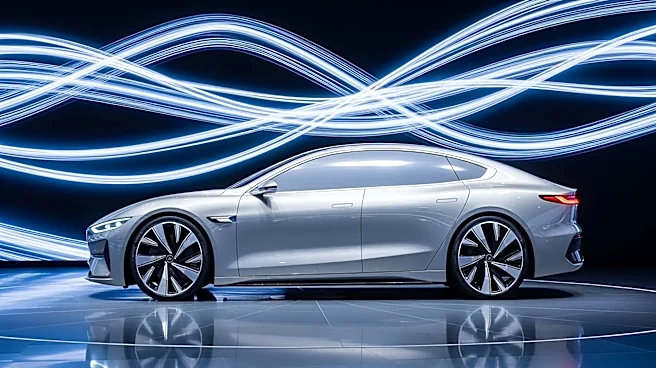
Hyundai has introduced the Ioniq V, a new electric sedan, at the 2026 Beijing Motor Show. This model is the first dedicated Ioniq vehicle for the Chinese market, differing significantly from the globally sold Ioniq 5 SUV. The Ioniq V features a sleek,
fastback-like design with a sharp aesthetic and frameless doors, embodying Hyundai's new design language, 'The Origin.' The vehicle is built on a dedicated electric platform, allowing for a longer wheelbase compared to traditional combustion-engine sedans. Inside, the Ioniq V is equipped with a 27-inch 4K touchscreen that spans the dashboard, eliminating the need for a separate instrument cluster. Hyundai claims the long-range version of the Ioniq V can achieve over 373 miles on a single charge, based on China's CLTC test cycle. This launch is part of Hyundai's strategy to introduce 20 new models in China over the next five years, aiming to sell 500,000 units annually by 2031.
Why It's Important?
The introduction of the Ioniq V marks Hyundai's strategic push into the Chinese electric vehicle market, which is highly competitive and dominated by local manufacturers offering advanced features at lower prices. By investing $1.1 billion in partnership with BAIC, Hyundai aims to strengthen its position in China, a crucial market for global automakers. The Ioniq V's launch highlights Hyundai's commitment to expanding its electric vehicle lineup and adapting to regional market demands. This move could influence Hyundai's global strategy, as success in China may lead to further innovations and adaptations in other markets. The focus on electric vehicles aligns with global trends towards sustainable transportation, potentially impacting Hyundai's market share and profitability.
What's Next?
Hyundai plans to follow the Ioniq V with an SUV based on the Earth concept in the first half of next year. The company will continue to expand its lineup with models in the midsize and large segments, some featuring range-extending combustion engines. Hyundai's success in China will depend on its ability to compete with local manufacturers and meet consumer expectations for advanced technology and affordability. The company's future strategies may include further investments in electric vehicle technology and partnerships to enhance its competitive edge.