

What's Happening?
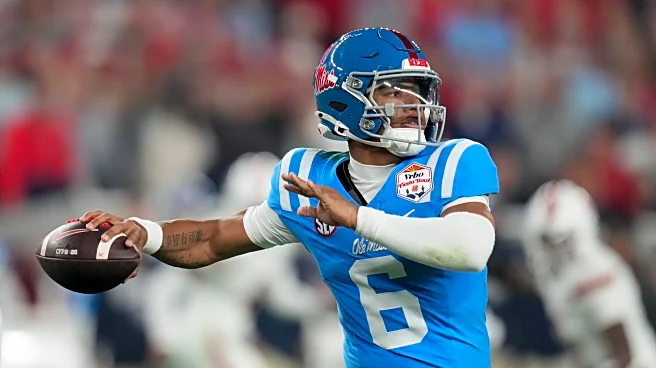
The Mississippi Supreme Court has denied the NCAA's petition to appeal a ruling that grants Ole Miss quarterback Trinidad Chambliss another year of eligibility. This decision follows a February injunction that allowed Chambliss to participate in the 2026
season, based on medical documentation indicating he was not ready to play during his time at Ferris State. The NCAA's appeal was rejected, leaving Chambliss eligible to play. The NCAA has faced challenges in dealing with a patchwork of state laws, leading to inconsistent rulings, especially when cases are filed with state-court judges elected by local constituents. This situation highlights the NCAA's ongoing struggle with collegiate antitrust violations and its efforts to seek federal intervention for an antitrust exemption.
Why It's Important?
The ruling is significant as it underscores the NCAA's difficulties in maintaining consistent regulations across different states, which can lead to varied legal outcomes. The decision to grant Chambliss another year of eligibility reflects broader issues within collegiate sports governance, particularly concerning player rights and eligibility. The NCAA's inability to secure a federal antitrust exemption means that schools continue to operate independently, complicating efforts to standardize rules regarding player compensation and mobility. This case may influence future legal battles and policy discussions about the NCAA's role and the need for federal oversight in collegiate athletics.
What's Next?
The NCAA may continue to seek federal intervention to address the inconsistencies in state laws affecting collegiate sports. This could involve lobbying for legislative changes that provide a uniform framework for player eligibility and compensation. Meanwhile, Chambliss will prepare for the upcoming season with Ole Miss, potentially setting a precedent for other athletes facing similar eligibility issues. The NCAA's ongoing legal challenges may prompt further scrutiny of its policies and governance structure, possibly leading to reforms aimed at better representing player interests.
Beyond the Headlines
The case highlights ethical considerations in collegiate sports, particularly the balance between institutional control and player rights. The NCAA's struggle to enforce consistent rules across states raises questions about the fairness and equity of its governance model. Additionally, the disparity between player restrictions and coach mobility underscores potential inequities in the treatment of athletes versus coaches. This situation may catalyze discussions about the need for a more equitable system that better protects player interests and ensures fair treatment across the board.