






What's Happening?
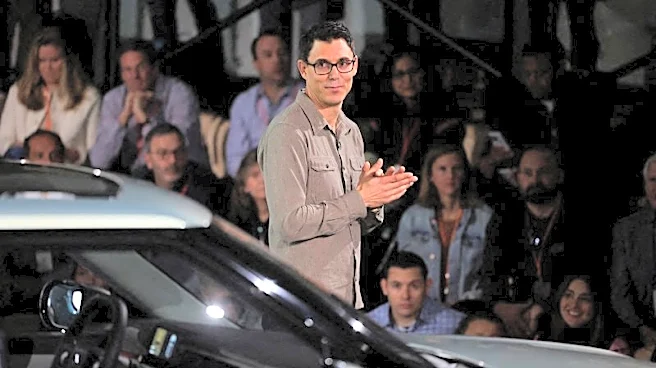
Uber CEO Dara Khosrowshahi has emphasized the significant potential of the autonomous vehicle (AV) sector, describing it as a 'trillion-dollar' market opportunity. Despite the launch of Waymo's robotaxis, Khosrowshahi stated that Uber's business remains
unaffected and continues to thrive. Uber's first-quarter revenue reached $13.20 billion, marking a 14% year-over-year increase, although slightly below market expectations of $13.29 billion. The company's adjusted earnings per share exceeded analyst predictions, coming in at 72 cents per share. Uber's gross bookings surged by 25% to $53.72 billion, with a 20% increase in trips to 3.64 billion. The company is investing over $10 billion in its self-driving initiatives, including equity stakes in robotaxi operators and fleet expansion.
Why It's Important?
Uber's strategic focus on autonomous vehicles underscores a transformative shift in the transportation industry, with potential implications for urban mobility and logistics. The company's substantial investment in self-driving technology could position it as a leader in the emerging AV market, potentially reshaping the competitive landscape. This move aligns with broader industry trends towards automation and could drive significant efficiencies and cost reductions. For stakeholders, including investors and partners, Uber's commitment to AVs represents a long-term growth opportunity, despite current market challenges. The company's ability to maintain strong earnings and growth in bookings highlights its resilience and adaptability in a rapidly evolving market.
What's Next?
Uber plans to continue its aggressive investment in autonomous vehicles, leveraging partnerships with companies like NVIDIA, Nuro, and Amazon's Zoox. The company aims to expand its robotaxi services in key markets, including Atlanta and Austin, and is committed to enhancing its platform's demand through strategic collaborations. As Uber advances its self-driving initiatives, regulatory developments and technological advancements will be critical factors influencing its trajectory. Stakeholders will be closely monitoring Uber's progress in scaling its AV operations and the impact on its overall business model.